
guide
Equipment Lifecycle Management: A Complete Guide for Businesses
A complete guide to managing equipment from planning and acquisition through maintenance, optimization, and disposal.
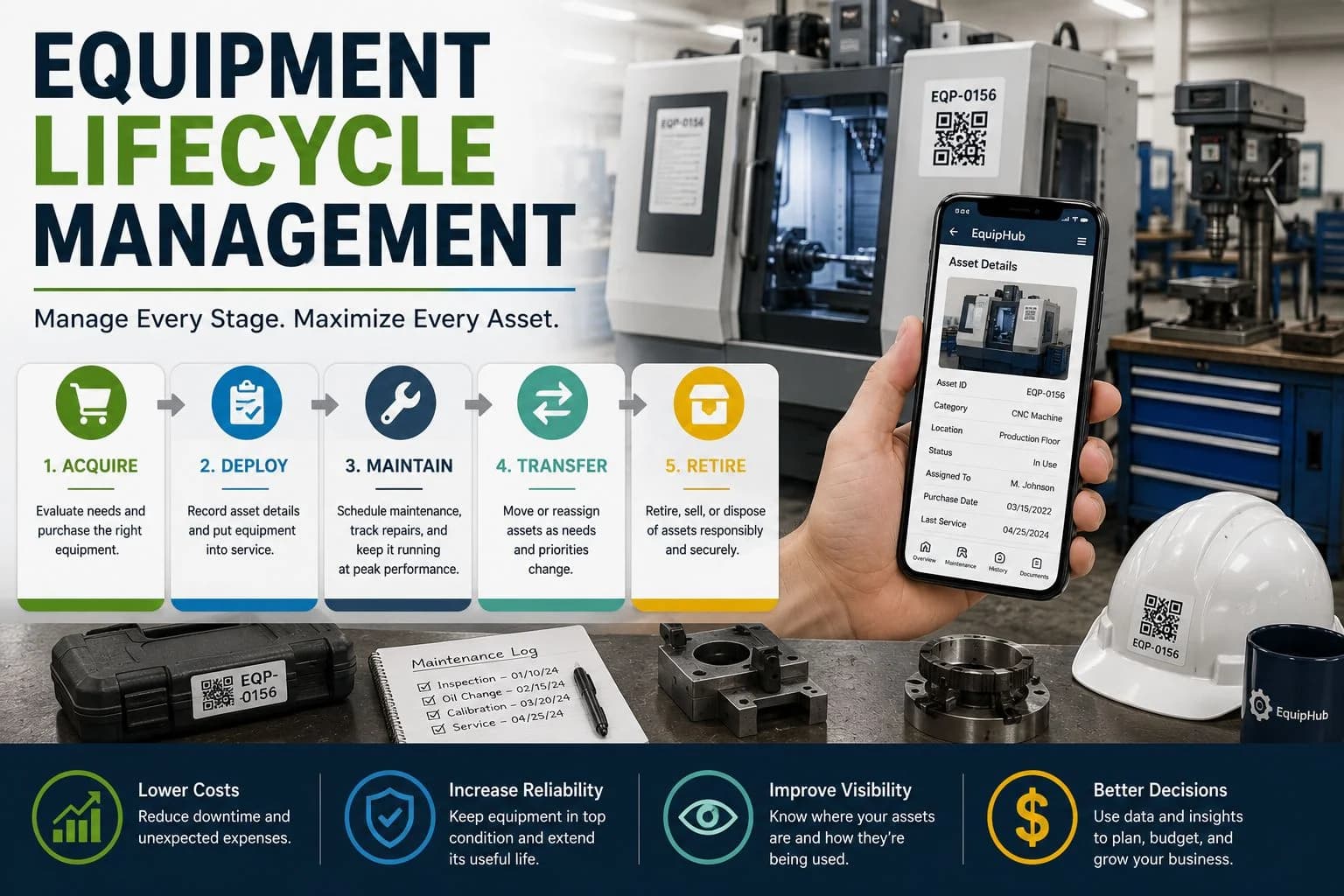

Introduction
Every piece of equipment in your business has a lifecycle. Whether you manage construction machinery, manufacturing equipment, landscaping tools, medical devices, or office assets, understanding the equipment lifecycle can help reduce costs, improve productivity, and extend asset value.
Equipment lifecycle management is the process of tracking and managing equipment from acquisition through disposal. Businesses that actively manage equipment lifecycles experience fewer breakdowns, lower maintenance costs, and better return on investment.
This guide explains the stages of equipment lifecycle management and how to build an effective lifecycle strategy for your organization.
What Is Equipment Lifecycle Management?
Equipment lifecycle management (ELM) refers to the systematic process of managing physical assets throughout their useful life.
The goal is to maximize value while minimizing operational costs and downtime.
A typical equipment lifecycle includes:
- Planning
- Acquisition
- Deployment
- Maintenance
- Optimization
- Retirement and Disposal
By managing each phase properly, businesses can make smarter decisions about purchasing, maintaining, replacing, and disposing of equipment.
Stage 1: Planning and Evaluation
Before purchasing equipment, organizations should determine:
- Business requirements
- Expected usage
- Budget constraints
- Maintenance requirements
- Expected lifespan
- Replacement strategy
Many businesses purchase equipment based solely on immediate need. A lifecycle approach considers long-term ownership costs.
Questions to ask:
- How often will the equipment be used?
- What is the expected lifespan?
- What are the maintenance costs?
- Will replacement parts be available?
- Does the equipment support future growth?
Proper planning reduces unexpected expenses later.
Stage 2: Acquisition
Once requirements have been established, equipment can be acquired through:
- Purchase
- Financing
- Leasing
- Rental agreements
At acquisition, important information should be recorded:
- Asset ID
- Serial number
- Purchase date
- Purchase price
- Vendor information
- Warranty information
- Expected service life
Capturing this information early creates a reliable asset record.
Stage 3: Deployment and Tracking
After acquisition, equipment enters service.
Organizations should immediately:
- Assign ownership
- Label assets
- Record location
- Track responsible personnel
- Document operating procedures
Without proper deployment processes, equipment often becomes difficult to track.
Asset labels and digital records provide visibility into where equipment is located and who is responsible for it.
Stage 4: Preventive Maintenance
Preventive maintenance is one of the most important aspects of lifecycle management.
Rather than waiting for equipment to fail, maintenance activities are scheduled proactively.
Examples include:
- Oil changes
- Filter replacements
- Calibration
- Inspections
- Safety testing
- Cleaning
Benefits include:
- Reduced downtime
- Lower repair costs
- Extended equipment life
- Improved safety
- Increased reliability
Preventive maintenance typically costs significantly less than emergency repairs.
See also: Preventive Maintenance Programs.
Stage 5: Performance Optimization
As equipment ages, businesses should continually evaluate performance.
Metrics may include:
- Utilization rates
- Downtime frequency
- Repair costs
- Maintenance expenses
- Productivity output
Questions to consider:
- Is the equipment still performing efficiently?
- Are maintenance costs increasing?
- Is technology becoming outdated?
- Would replacement improve productivity?
Monitoring these metrics helps identify when equipment is approaching the end of its useful life.
Stage 6: Retirement and Disposal
Eventually, equipment reaches a point where continued operation is no longer cost-effective.
Signs include:
- Frequent breakdowns
- Rising repair expenses
- Parts becoming unavailable
- Safety concerns
- Obsolete technology
Disposal options may include:
- Sale
- Trade-in
- Auction
- Recycling
- Donation
Before disposal, businesses should ensure all records are updated and equipment is removed from inventory systems.
See also: Asset Disposal Procedures.
Common Lifecycle Management Challenges
Many organizations struggle with:
Missing Equipment Records
Incomplete asset records make it difficult to track ownership, maintenance history, and costs.
Reactive Maintenance
Waiting until equipment fails often results in expensive repairs and downtime.
Poor Inventory Visibility
Without tracking systems, businesses lose visibility into asset locations and usage.
Delayed Replacement Decisions
Holding equipment too long can increase operating costs and reduce productivity.
Benefits of Equipment Lifecycle Management
Organizations that implement lifecycle management often experience:
Lower Operating Costs
Preventive maintenance reduces costly emergency repairs.
Increased Equipment Lifespan
Proper care extends useful service life.
Improved Productivity
Reliable equipment minimizes downtime.
Better Financial Planning
Replacement schedules become predictable.
Improved Compliance
Maintenance and inspection records are easier to maintain.
Best Practices
To improve equipment lifecycle management:
- Create unique asset IDs
- Maintain accurate records
- Track maintenance history
- Schedule preventive maintenance
- Conduct regular audits
- Monitor utilization rates
- Establish replacement policies
- Use asset management software
Consistency is more important than complexity.
EquipHub supports lifecycle management with QR-linked asset records, field updates, maintenance calendars, and insurance-ready exports — from acquisition through retirement.
Conclusion
Equipment lifecycle management helps businesses maximize the value of their investments while reducing risk and downtime. By managing assets from planning through disposal, organizations gain greater visibility, improve operational efficiency, and make more informed purchasing decisions.
A structured lifecycle management program ensures equipment remains productive, reliable, and cost-effective throughout its entire service life.