
guide
What to Expect During an Equipment Insurance Claim
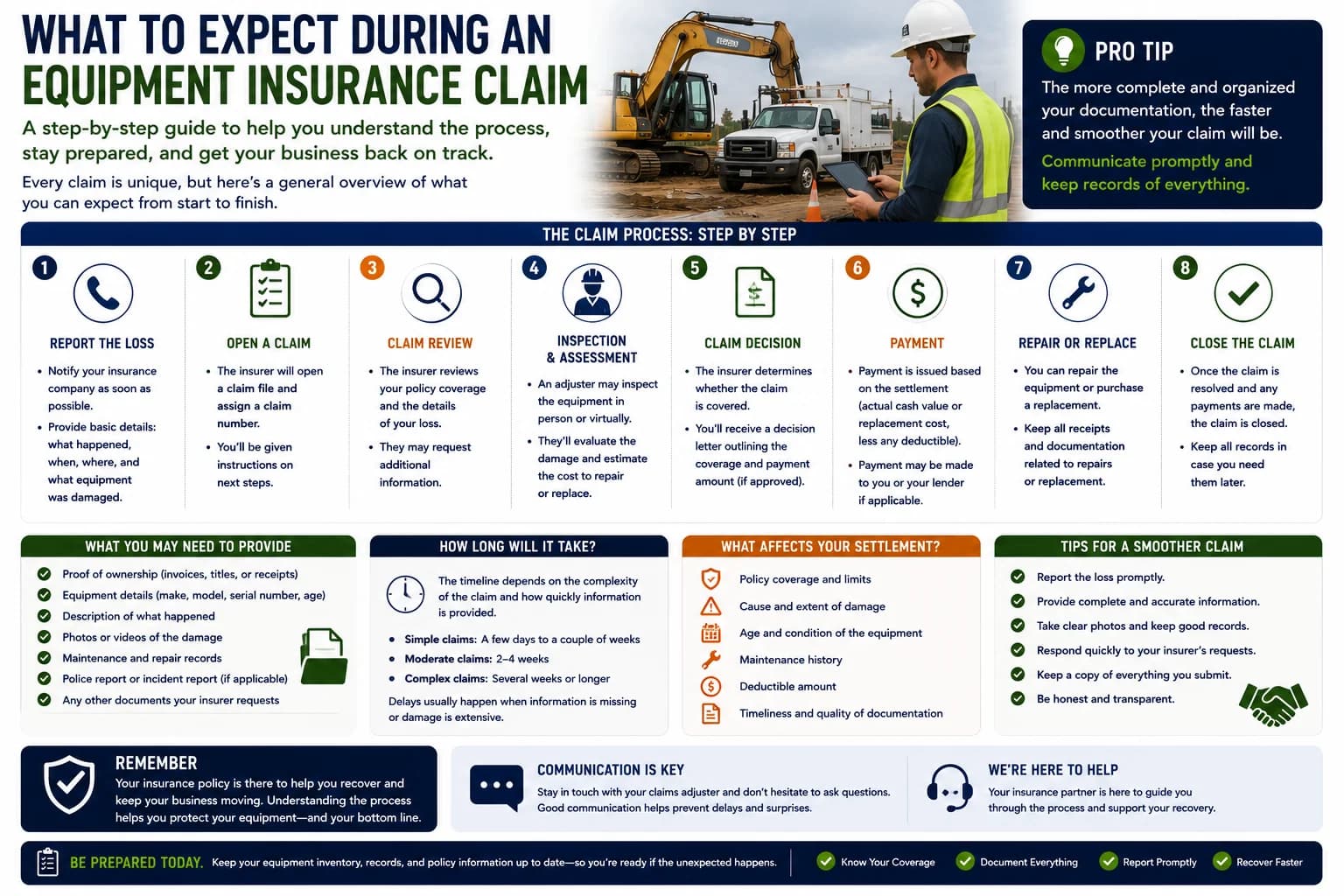
Learn the typical stages of an equipment insurance claim, from initial notice and evidence collection through inspection, valuation, repairs, settlement, and closure.

Introduction
An equipment insurance claim can involve several people, documents, inspections, and decisions. Understanding the general process helps business owners respond to requests, preserve evidence, and maintain a clear record from first notice through settlement.
The exact process depends on the insurer, policy, loss type, and claim complexity.
This article is general educational information. Follow your insurer's instructions and consult licensed or qualified professionals regarding your claim.
Step 1: Report the Loss
The claim usually begins when the policyholder notifies the insurer, agent, or broker.
Be prepared to provide:
- Policy information
- Date and location
- Equipment involved
- Description of what happened
- Immediate safety concerns
- Steps taken to prevent further damage
- Police or emergency report information
Request a claim number and primary contact.
Step 2: Initial Claim Review
The insurer may review:
- Whether the policy was active
- Which coverage may apply
- Applicable limits
- Deductibles
- Exclusions
- Immediate inspection needs
This initial review is not always a final coverage decision.
Step 3: Evidence Collection
The insurer may request:
- Asset inventory
- Purchase invoices
- Serial numbers
- Pre-loss photos
- Damage photos
- Maintenance records
- Repair history
- Police reports
- Witness information
- Lease or financing agreements
Submit organized copies and retain originals.
Step 4: Inspection
An adjuster, engineer, technician, or specialist may inspect the equipment.
They may evaluate:
- Cause of damage
- Repairability
- Pre-loss condition
- Age and depreciation
- Replacement options
- Salvage value
- Related property damage
Avoid disposing of equipment until inspection requirements are resolved.
Step 5: Repair or Replacement Estimates
The claim may require:
- Technician diagnosis
- Repair estimate
- Replacement quote
- Freight or installation estimate
- Comparable equipment research
- Rental cost documentation
High-value or specialized equipment may require several opinions.
Step 6: Coverage and Valuation Decision
The insurer evaluates the claim under the policy.
The decision may address:
- Covered cause of loss
- Covered equipment
- Valuation method
- Deductible
- Limits
- Depreciation
- Salvage
- Business income or extra expenses
Ask for explanations in writing when something is unclear.
Step 7: Repairs, Replacement, or Payment
Depending on the claim, the business may:
- Repair the equipment
- Replace it
- Receive an actual-cash-value payment
- Receive partial payment before replacement
- Transfer salvage
- Complete required documentation
Replacement cost policies may require proof that replacement occurred.
Step 8: Claim Closure
Before closure, confirm:
- All equipment has been addressed
- Supplemental damage was reported
- Invoices were submitted
- Temporary expenses were included
- Required proof of replacement was provided
- Loan or loss-payee requirements were handled
Retain the final claim file with the asset record.
How Long Does a Claim Take?
Timing depends on:
- Loss severity
- Evidence availability
- Equipment complexity
- Parts availability
- Cause investigation
- Number of assets
- Catastrophe volume
- Disputes over value or coverage
Prompt, organized responses can reduce avoidable delays.
Claim Communication Checklist
Track:
- Claim number
- Adjuster
- Contact dates
- Documents submitted
- Inspection appointments
- Estimates
- Requests
- Deadlines
- Payments
- Written decisions
Use factual, consistent descriptions throughout the process.
Conclusion
An equipment insurance claim typically moves through notice, evidence collection, inspection, valuation, coverage review, repair or replacement, and closure.
Business owners can prepare by maintaining complete asset records, preserving damaged equipment, tracking communication, and responding promptly to document requests.