
guide
Tax Records for Equipment Owners: What to Keep Organized
Learn what equipment-related tax records owners typically organize for purchases, financing, depreciation, repairs, disposals, and audits.

Introduction
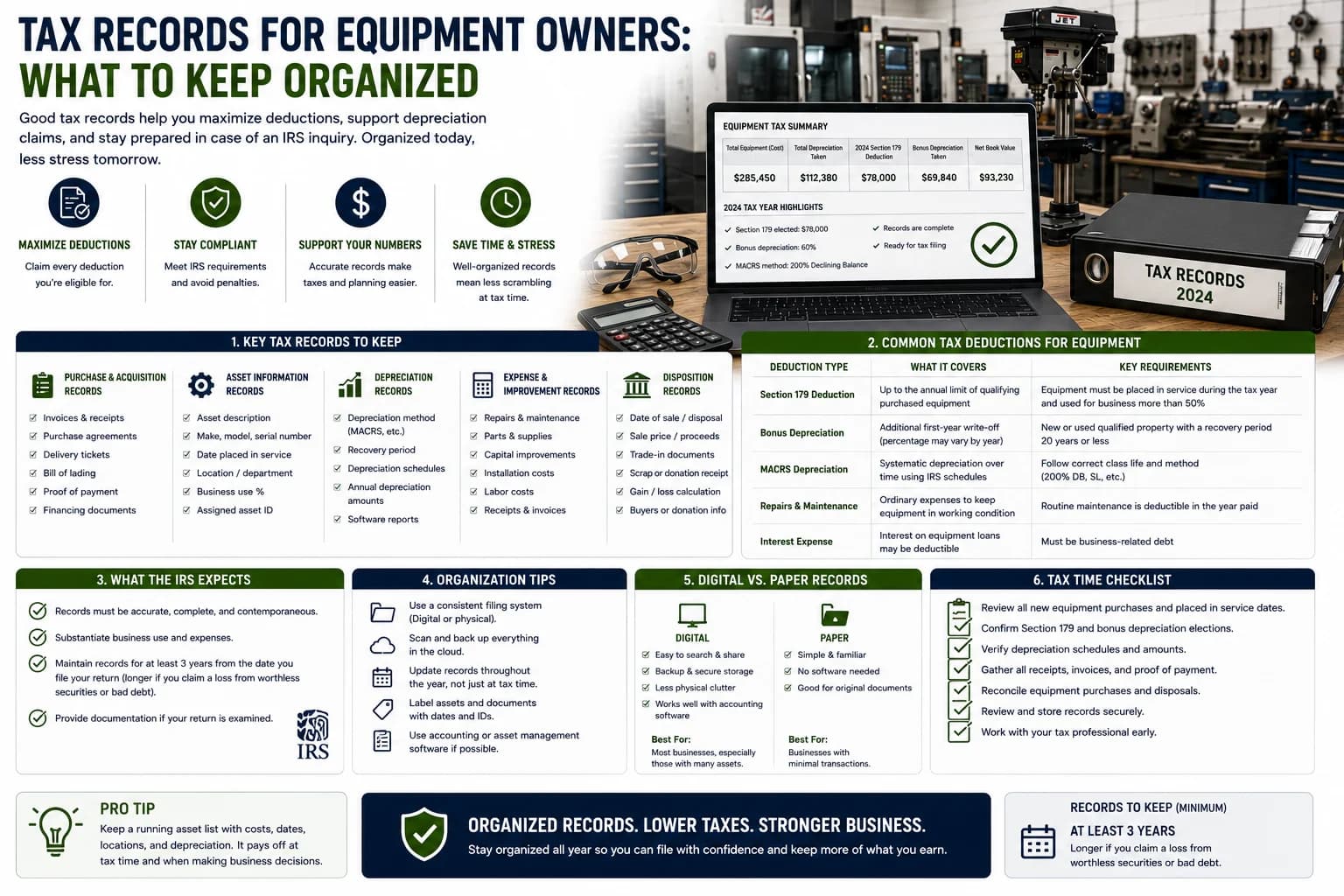
Equipment can affect business taxes in several ways. Purchases, financing, depreciation, repairs, improvements, sales, trade-ins, and disposals may all require documentation.
This guide is not tax advice. Equipment owners should work with a qualified CPA or tax professional. The goal here is to explain the operational records businesses commonly organize so tax work is easier and better supported.
Why Tax Records Matter
Good equipment tax records help businesses:
- Support depreciation
- Separate repairs from improvements
- Document purchase cost
- Track financing
- Record disposals
- Respond to notices
- Prepare year-end workpapers
- Support tax elections when applicable
Missing records can create delays and uncertainty.
Purchase Records
For each equipment purchase, keep:
- Invoice
- Purchase agreement
- Payment confirmation
- Asset ID
- Serial number
- Purchase date
- In-service date
- Delivery and installation costs
- Sales tax details
These records help establish cost basis.
Financing Records
If equipment is financed, keep:
- Loan or lease agreement
- Lender name
- Payment schedule
- Interest rate
- Down payment record
- Year-end balance
- Payoff statement when applicable
Financing records help separate principal, interest, and ownership details.
Repair and Improvement Records
Repairs and improvements may be treated differently.
Track:
- Date
- Asset ID
- Vendor
- Work performed
- Parts used
- Cost
- Reason for work
- Whether the work extended useful life or restored normal function
Your CPA should determine tax treatment, but detailed records support the decision.
Depreciation Support
Depreciation records may require:
- Cost basis
- In-service date
- Useful life
- Depreciation method
- Section 179 or bonus depreciation elections if applicable
- Asset classification
Operations teams should supply accurate dates, costs, and asset details.
Disposal Records
When equipment leaves the business, keep:
- Sale or scrap receipt
- Trade-in agreement
- Donation acknowledgement
- Disposal date
- Proceeds
- Buyer or recipient
- Final asset status
Disposal records help close the asset properly for tax and accounting purposes.
Organizing Records by Asset and Tax Year
A practical filing approach is to organize records by:
- Asset ID
- Tax year
- Document type
- Vendor
- Disposal status
This makes it easier to answer questions about a specific piece of equipment.
Common Mistakes
Avoid these issues:
Missing In-Service Dates
The in-service date may matter for depreciation.
Mixing Repairs and Improvements
Detailed descriptions help your CPA classify costs.
No Disposal Documentation
Equipment that leaves the business should have a paper trail.
Scattered Financing Records
Loan and lease documents should be easy to find.
Tax Record Checklist
Keep organized:
- Purchase invoices
- Payment records
- Asset IDs
- Serial numbers
- Financing agreements
- Maintenance and repair invoices
- Capital improvement records
- Depreciation schedules
- Disposal receipts
- Year-end equipment summary
Good records reduce year-end friction.
Conclusion
Tax records for equipment owners should tell the full story of each asset: when it was purchased, how it was paid for, when it entered service, how it was maintained, and how it left the business.
Work with a qualified tax professional for advice, and keep equipment records organized so they can make decisions with complete information.