
guide
Reducing Equipment Downtime: Strategies to Improve Reliability and Productivity
Learn practical strategies to reduce equipment downtime with preventive maintenance, inspections, operator training, spare parts planning, and performance tracking.

Introduction
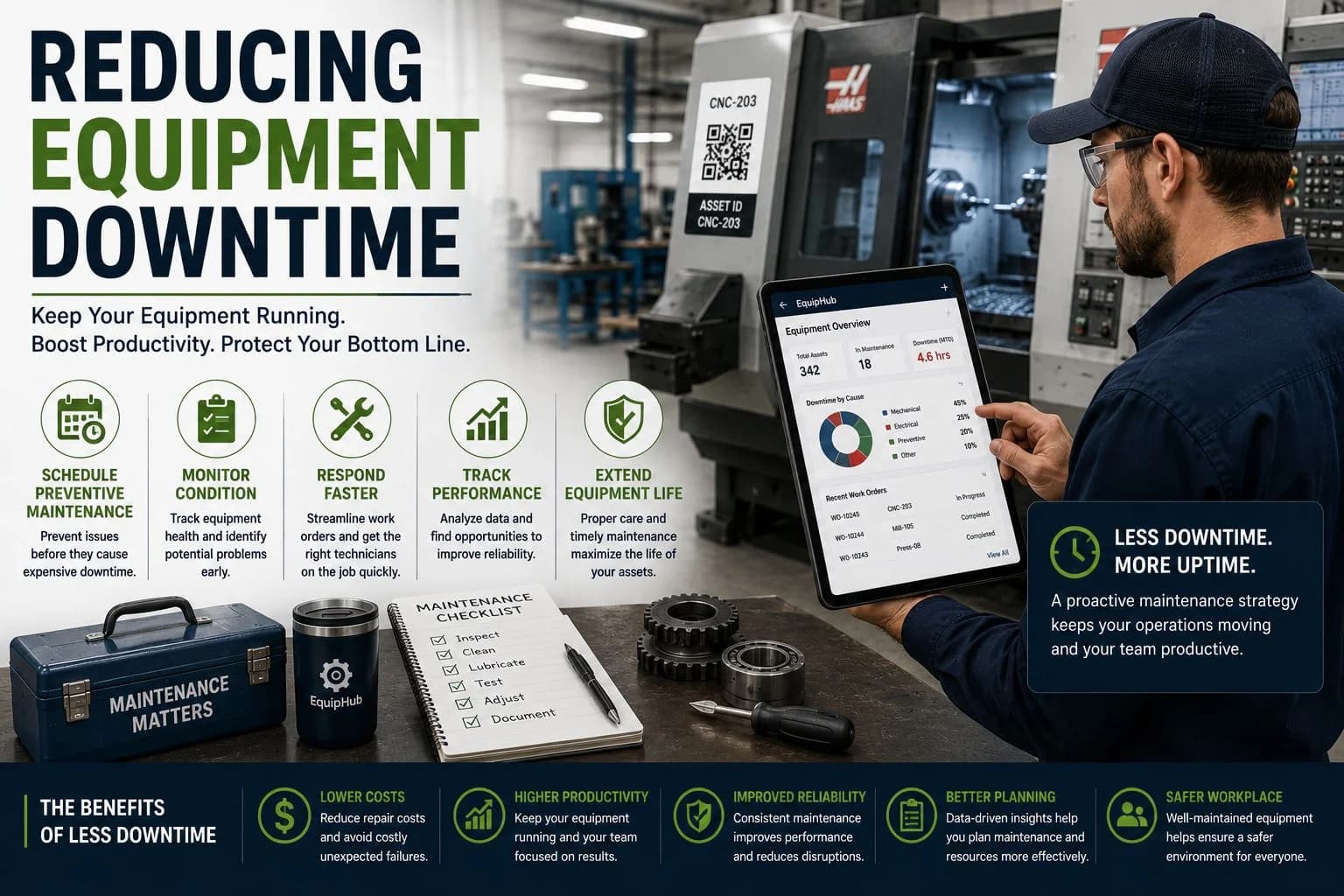
Equipment downtime is one of the most costly challenges businesses face. Whether managing construction equipment, manufacturing machinery, fleet vehicles, landscaping equipment, medical devices, or specialized tools, every minute equipment is unavailable can impact productivity, revenue, customer satisfaction, and operational efficiency.
While some downtime is planned and necessary for maintenance, unplanned downtime often results in costly disruptions and emergency repairs. The good news is that much of this downtime can be prevented through proactive asset management and maintenance practices.
This guide explains the causes of equipment downtime, its impact on businesses, and proven strategies for reducing downtime while improving equipment reliability and performance.
What Is Equipment Downtime?
Equipment downtime refers to any period when equipment is unavailable for its intended use.
Downtime generally falls into two categories:
Planned Downtime
Scheduled downtime includes:
- Preventive maintenance
- Inspections
- Equipment upgrades
- Calibration
- Component replacement
Planned downtime is controlled and expected.
Unplanned Downtime
Unplanned downtime occurs when equipment becomes unavailable unexpectedly due to:
- Mechanical failures
- Electrical problems
- Operator errors
- Missing parts
- Lack of maintenance
- Safety concerns
Unplanned downtime is typically more expensive and disruptive.
Why Reducing Downtime Matters
Downtime affects more than just equipment availability.
It can result in:
- Lost productivity
- Delayed projects
- Missed deadlines
- Increased labor costs
- Emergency repair expenses
- Reduced customer satisfaction
- Lower profitability
For organizations that depend heavily on equipment, even a single breakdown can have significant operational consequences.
Common Causes of Equipment Downtime
Understanding the causes of downtime is the first step toward reducing it.
Lack of Preventive Maintenance
One of the most common causes of downtime is neglecting routine maintenance.
Without regular inspections and servicing:
- Components wear out
- Small issues go unnoticed
- Failures become more likely
Preventive maintenance helps identify problems before breakdowns occur.
Equipment Aging
As equipment ages, components naturally deteriorate.
Common issues include:
- Wear and tear
- Corrosion
- Fatigue failures
- Obsolete parts
Older equipment often requires closer monitoring and more frequent maintenance.
Operator Error
Improper equipment operation can lead to:
- Premature wear
- Equipment damage
- Safety incidents
- Unexpected failures
Training employees on proper operating procedures helps reduce these risks.
Poor Maintenance Documentation
Without maintenance records, organizations may:
- Miss service intervals
- Overlook recurring problems
- Lose visibility into repair history
Accurate documentation improves maintenance planning and decision-making.
Delayed Repairs
Ignoring minor issues often leads to larger failures.
Examples include:
- Small fluid leaks
- Worn belts
- Damaged hoses
- Loose connections
Addressing issues early prevents larger and more expensive repairs.
Lack of Spare Parts
A simple repair can become a lengthy outage when replacement parts are unavailable.
Organizations should identify critical spare parts and maintain appropriate inventory levels.
The Cost of Equipment Downtime
Many businesses underestimate the true cost of downtime.
Downtime costs may include:
Direct Costs
- Repair expenses
- Replacement parts
- Service technician labor
- Equipment rental
Indirect Costs
- Lost production
- Missed deadlines
- Employee idle time
- Customer dissatisfaction
- Revenue loss
Indirect costs often exceed the repair costs themselves.
Strategies for Reducing Equipment Downtime
Reducing downtime requires a proactive approach.
Implement Preventive Maintenance Programs
Preventive maintenance is one of the most effective ways to reduce downtime.
Maintenance schedules should include:
- Inspections
- Lubrication
- Fluid changes
- Filter replacement
- Safety testing
- Component checks
Routine maintenance helps prevent unexpected failures.
Maintain Accurate Equipment Records
Equipment records should include:
- Asset information
- Maintenance history
- Repair records
- Warranty information
- Service schedules
Accurate records improve maintenance planning and troubleshooting.
Monitor Equipment Condition
Condition monitoring helps identify developing problems before failure occurs.
Examples include monitoring:
- Vibration
- Temperature
- Pressure
- Fluid quality
- Performance metrics
Early detection allows maintenance teams to intervene before equipment fails.
Conduct Regular Inspections
Inspections help identify:
- Leaks
- Wear
- Loose components
- Safety concerns
- Operational issues
Routine inspections are often the first line of defense against downtime.
Train Equipment Operators
Operators interact with equipment every day.
Proper training helps employees:
- Use equipment correctly
- Recognize warning signs
- Report problems early
- Reduce unnecessary wear
Well-trained operators contribute significantly to equipment reliability.
Establish Standard Operating Procedures
Standardized procedures help ensure consistency.
Procedures should cover:
- Equipment startup
- Operation
- Shutdown
- Inspection
- Maintenance reporting
Consistency reduces errors and improves equipment performance.
Improve Spare Parts Management
Waiting for replacement parts can dramatically extend downtime.
Organizations should identify:
- Critical components
- Frequently replaced items
- Long lead-time parts
Maintaining essential spare parts inventory can significantly reduce repair delays.
Analyze Failure Trends
Reviewing maintenance history can reveal recurring problems.
Questions to ask include:
- Which assets fail most often?
- What components fail repeatedly?
- Are failures occurring under similar conditions?
Trend analysis helps organizations address root causes rather than symptoms.
Replace Equipment at the Right Time
Keeping equipment beyond its useful life often increases downtime.
Warning signs include:
- Increasing repair costs
- Frequent breakdowns
- Declining performance
- Parts availability issues
Replacement decisions should be based on data rather than age alone.
Improve Asset Tracking
Asset tracking systems help organizations maintain visibility into:
- Equipment locations
- Maintenance schedules
- Assignments
- Service history
Improved visibility supports better maintenance planning and operational control.
Measuring Equipment Downtime
Organizations should track downtime metrics to evaluate performance.
Common metrics include:
Total Downtime Hours
The total amount of time equipment is unavailable.
Number of Breakdowns
Tracks failure frequency.
Mean Time Between Failures (MTBF)
Measures the average time equipment operates before failing.
Higher MTBF generally indicates better reliability.
Mean Time to Repair (MTTR)
Measures how long repairs take.
Lower MTTR indicates faster recovery.
Equipment Availability
Measures the percentage of time equipment is operational and available for use.
Availability is a key performance indicator for many organizations.
Building a Downtime Reduction Plan
An effective downtime reduction plan should include:
Asset Inventory
Maintain accurate equipment records.
Maintenance Schedule
Implement preventive maintenance activities.
Inspection Program
Conduct regular equipment inspections.
Training Program
Educate operators and maintenance personnel.
Spare Parts Strategy
Stock critical replacement components.
Performance Monitoring
Track downtime metrics and maintenance performance.
These elements work together to improve equipment reliability.
Common Mistakes That Increase Downtime
Avoid these common issues:
Reactive Maintenance
Waiting for failures before taking action.
Ignoring Small Problems
Minor issues often become major failures.
Poor Documentation
Missing records make maintenance planning difficult.
Inadequate Training
Improper operation increases wear and failure rates.
Lack of Accountability
Maintenance responsibilities should be clearly assigned.
Best Practices for Downtime Reduction
Organizations that successfully reduce downtime typically:
- Follow preventive maintenance schedules
- Track maintenance history
- Conduct routine inspections
- Train equipment operators
- Monitor asset performance
- Maintain spare parts inventories
- Analyze failures regularly
- Replace aging equipment strategically
These practices improve reliability and operational efficiency.
Conclusion
Reducing equipment downtime is essential for maintaining productivity, controlling costs, and maximizing equipment value. While some downtime is unavoidable, much of it can be prevented through proactive maintenance, proper asset management, employee training, and effective planning.
Organizations that focus on reliability rather than simply repairing failures often experience lower operating costs, fewer disruptions, and better long-term equipment performance. By implementing a structured downtime reduction strategy, businesses can protect their investments and keep operations running smoothly.