
guide
Preparing Equipment Records for Your Accountant: A Year-End Guide
Learn what equipment records to prepare for your accountant, including additions, disposals, financing, depreciation support, and repair documentation.

Introduction
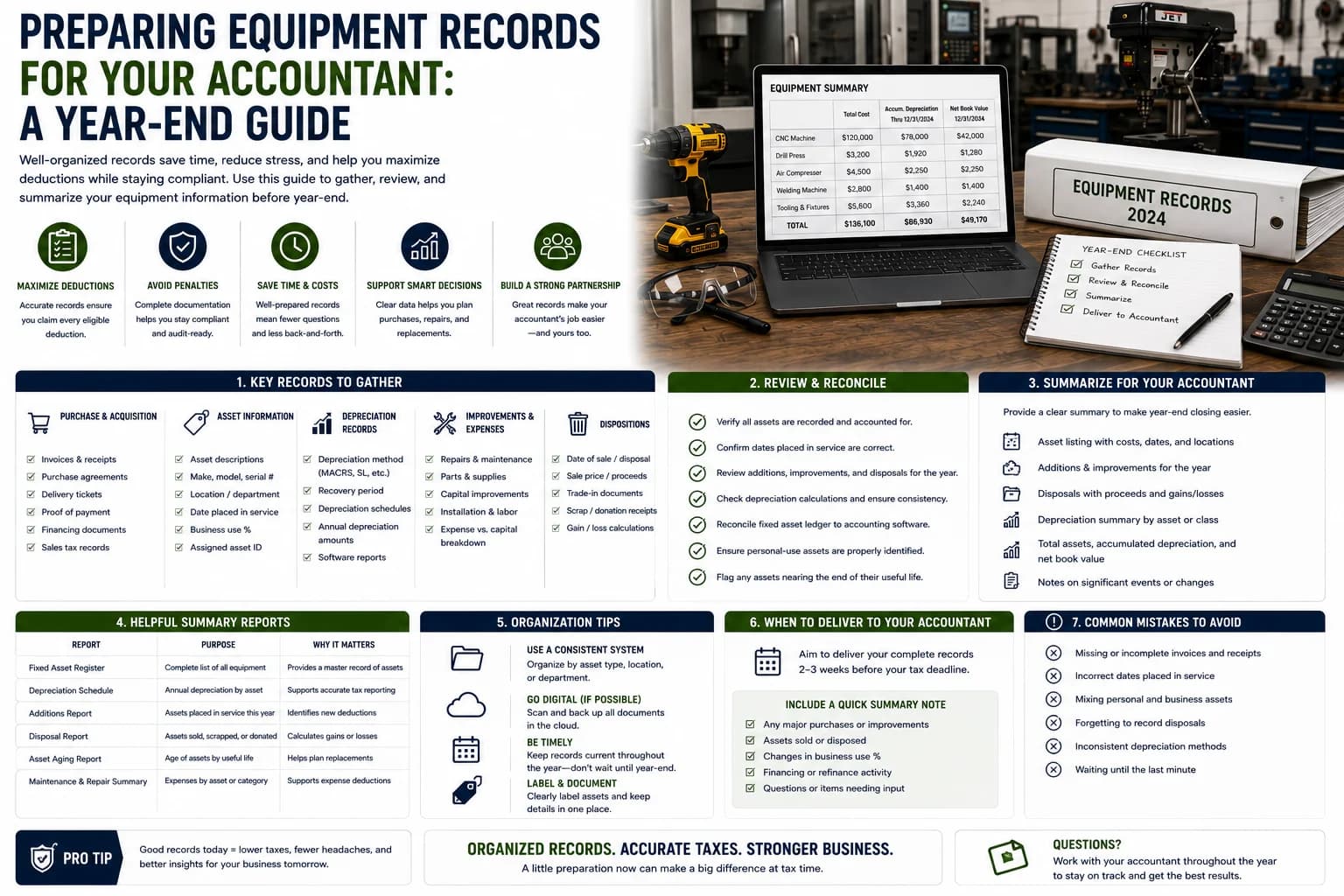
Year-end accounting is easier when equipment records are organized. Accountants often need purchase details, disposal records, loan balances, depreciation support, repair history, and insurance schedules to prepare financial statements or tax workpapers.
When records are scattered, year-end review becomes slower and more frustrating for everyone.
This guide explains how equipment owners can prepare a cleaner year-end package for their accountant.
Why Equipment Records Matter at Year-End
Equipment affects:
- Depreciation
- Loan balances
- Insurance schedules
- Repairs and maintenance expense
- Capital improvements
- Asset disposals
- Tax planning
- Financial reporting
Accurate records help accountants classify costs and update fixed asset schedules correctly.
Prepare an Additions List
Create a list of equipment purchased during the year.
Include:
- Asset ID
- Equipment name
- Purchase date
- In-service date
- Vendor
- Purchase price
- Sales tax
- Delivery or installation costs
- Financing details
Attach invoices, purchase agreements, and payment records.
Prepare a Disposals List
Accountants also need to know what left the business.
For each disposal, provide:
- Asset ID
- Equipment name
- Disposal date
- Disposal method
- Sale or scrap proceeds
- Buyer or vendor
- Trade-in details
- Approval record
- Supporting receipt
This helps remove assets from the books properly.
Identify Capital Improvements
Some equipment costs may be repairs, while others may be capital improvements.
Provide records for:
- Major upgrades
- Rebuilds
- Attachments
- Installations
- Significant modifications
Your accountant should decide the proper treatment, but clear records help them make that decision.
Gather Loan and Lease Information
For financed equipment, prepare:
- Lender name
- Loan or lease agreement
- Original balance
- Current balance
- Interest rate
- Payment schedule
- Maturity date
- Payoff information
Loan balances should be reconciled with accounting records.
Organize Repair and Maintenance Records
Maintenance records help accountants understand expenses and support asset decisions.
Useful details include:
- Date
- Asset ID
- Work performed
- Vendor or technician
- Parts used
- Cost
- Whether work was routine or major
Clear descriptions reduce classification questions.
Reconcile Insurance Schedules
Insurance records should match active equipment.
Review:
- Assets insured
- Assets sold or scrapped
- New purchases
- Coverage values
- Location changes
This can identify retired equipment still being insured or new equipment missing from coverage.
Common Year-End Mistakes
Avoid these issues:
Missing Invoices
Purchase records are needed for cost basis.
No Disposal Documentation
Retirements should be supported by receipts or sale records.
Confusing Repairs and Improvements
Detailed descriptions help accountants classify costs.
Missing Loan Balances
Financing records should be current.
Waiting Until the Deadline
Gathering records early reduces stress.
Accountant Package Checklist
Prepare:
- Equipment additions list
- Purchase invoices
- In-service dates
- Disposal list
- Sale or scrap receipts
- Loan and lease documents
- Year-end balances
- Repair and maintenance summary
- Capital improvement records
- Insurance schedule
This package helps your accountant work faster and ask better questions.
Conclusion
Preparing equipment records for your accountant is mostly about organizing the asset story for the year. What was purchased, improved, financed, repaired, sold, scrapped, or retired?
When those records are clear, accountants can update depreciation, financing, tax, and reporting schedules with fewer delays and fewer missing details.