
guide
OSHA Documentation Basics: Equipment Records That Support Safer Workplaces
Learn basic equipment-related documentation practices for inspections, training, maintenance, lockout procedures, and safety records.

Introduction
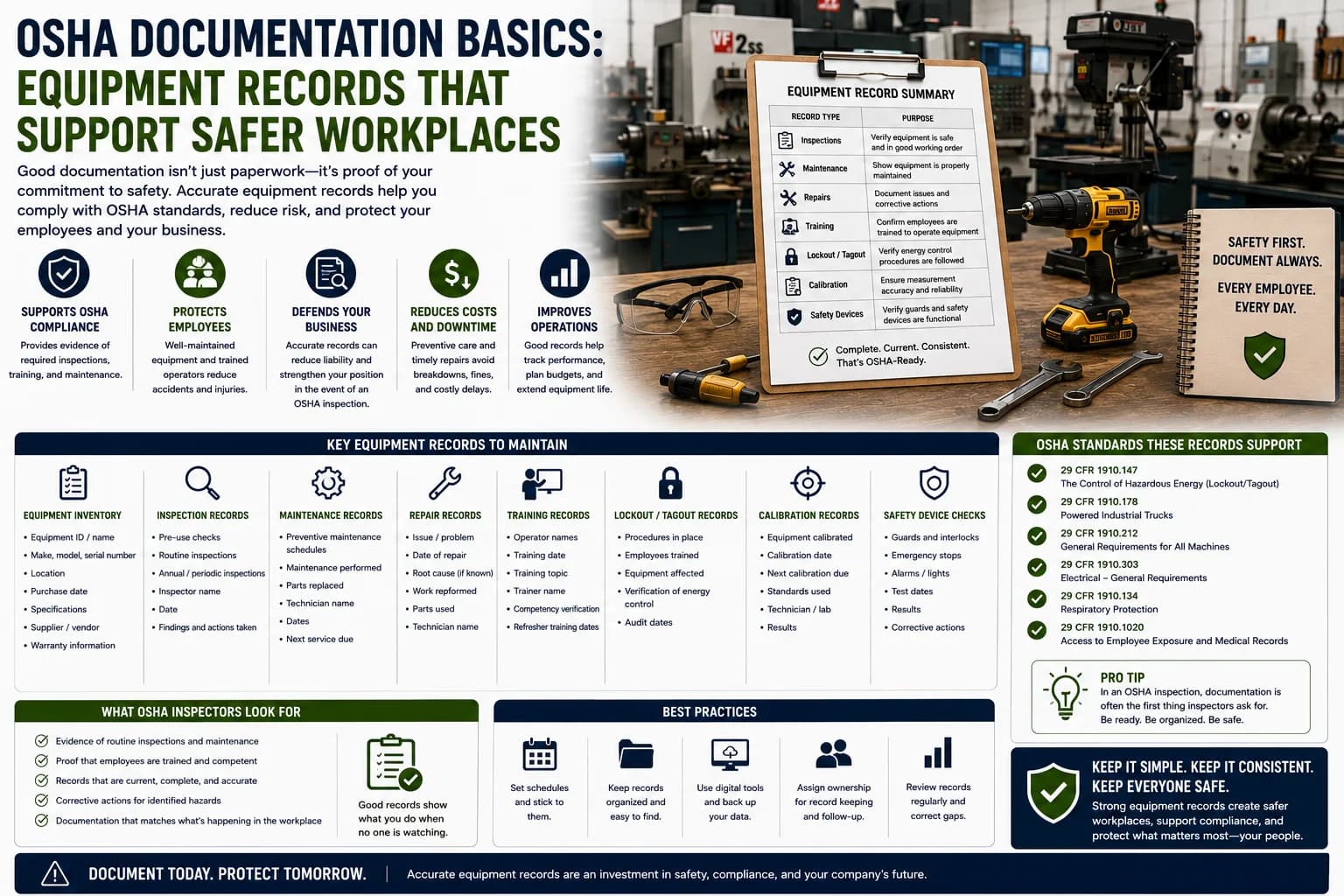
Workplace safety programs depend on more than policies. They also depend on documentation that shows equipment has been inspected, maintained, used properly, and removed from service when unsafe.
This guide provides a practical overview of equipment-related documentation patterns that may support safety programs. It is not legal advice. Businesses should consult safety professionals, counsel, and applicable OSHA requirements for their specific workplace.
Why Equipment Documentation Matters
Equipment-related records help businesses:
- Track inspections
- Document corrective action
- Verify training
- Support maintenance planning
- Record incidents
- Show equipment status
- Improve accountability
Good records make safety processes easier to follow and review.
Common Equipment-Related Records
Depending on the workplace, records may include:
- Equipment inspection logs
- Maintenance records
- Repair documentation
- Training records
- Lockout/tagout procedures
- Incident reports
- Corrective action records
- Manufacturer manuals
- Safety data or operating procedures
The exact requirements depend on equipment type and work environment.
Inspection Documentation
Inspection records should capture:
- Asset ID
- Inspection date
- Inspector name
- Checklist items
- Pass or fail result
- Defects found
- Corrective action
- Final sign-off
Failed inspections should be easy to identify and should trigger follow-up.
Maintenance Documentation
Maintenance records show that equipment is being cared for.
Useful fields include:
- Service date
- Work performed
- Technician
- Parts used
- Safety concerns
- Follow-up needs
- Return-to-service approval
Maintenance history can help identify recurring risks.
Training Records
Some equipment requires operator training.
Training records may include:
- Employee name
- Training date
- Equipment type
- Instructor
- Topics covered
- Evaluation result
- Renewal date if applicable
Training records should be available to the people responsible for safety management.
Lockout/Tagout and Service Procedures
Equipment that is serviced or repaired may require documented procedures.
Records should identify:
- Equipment covered
- Energy sources
- Shutdown steps
- Lockout points
- Verification steps
- Authorized employees
- Review date
Procedures should be updated when equipment changes.
Incident and Corrective Action Records
When equipment is involved in an incident or near miss, document:
- Date and time
- Asset involved
- Location
- Description
- People involved
- Immediate action
- Root cause
- Corrective action
- Completion date
These records help prevent repeat incidents.
Common Documentation Mistakes
Avoid these issues:
Missing Corrective Action
Finding a defect is not enough. Closure should be documented.
Scattered Records
Records should be easy to locate during reviews.
Outdated Procedures
Equipment changes may require updated instructions.
No Responsible Owner
Someone should be accountable for document quality and updates.
OSHA Documentation Basics Checklist
A practical equipment documentation system should include:
- Asset inventory
- Inspection records
- Maintenance history
- Training records
- Safety procedures
- Incident reports
- Corrective action tracking
- Document review dates
- Easy access for responsible staff
These basics support stronger safety practices.
Conclusion
Equipment documentation supports safer workplaces by making inspections, maintenance, training, and corrective action visible. While specific OSHA requirements vary, businesses benefit from keeping equipment records accurate, searchable, and current.
Use this guide as an operational starting point, and rely on qualified safety and legal professionals for requirements that apply to your workplace.