
guide
Equipment Service Logs: Why Every Business Should Maintain Detailed Maintenance Records
Learn why equipment service logs matter and what to include in maintenance records for repairs, inspections, compliance, and replacement planning.
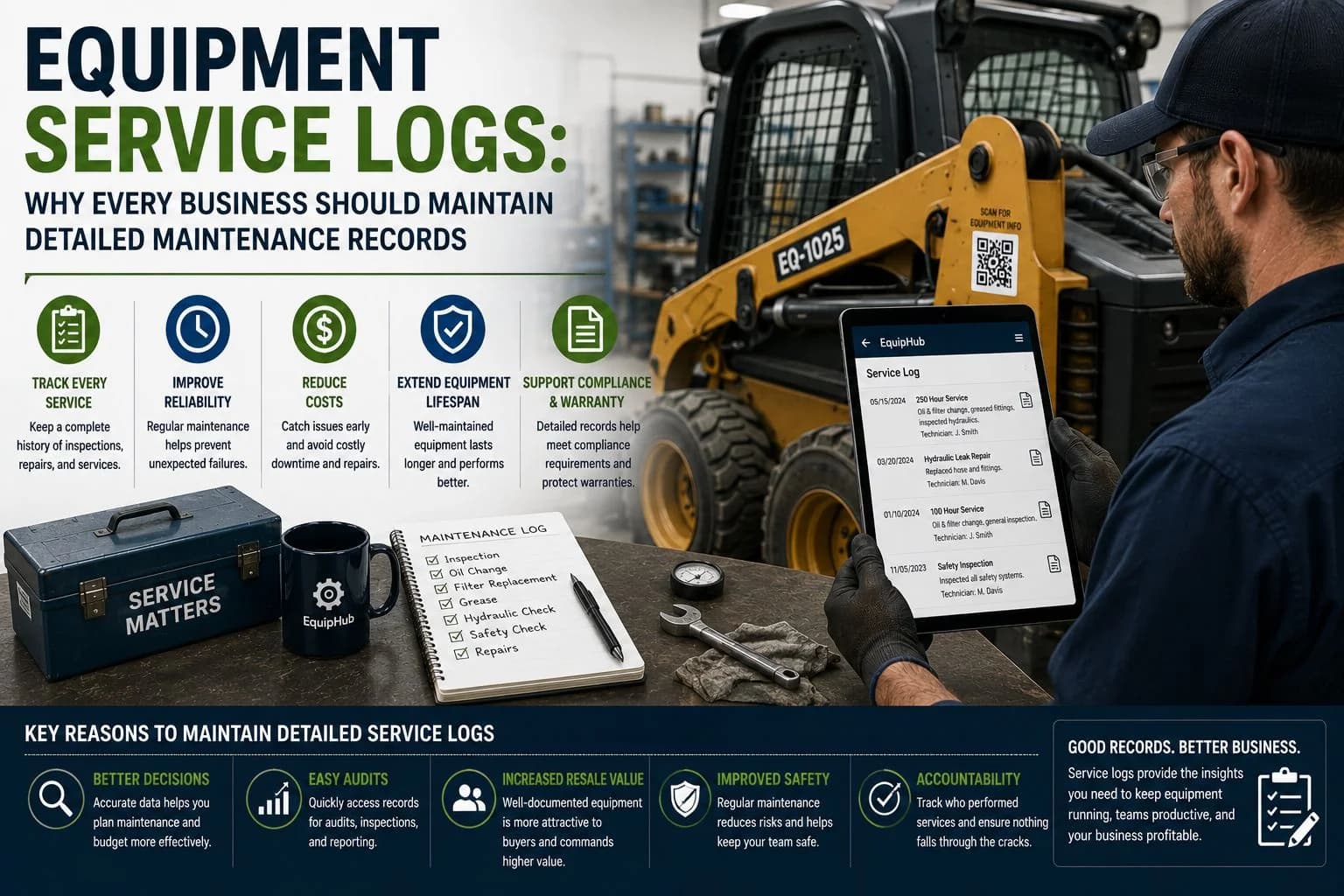

Introduction
Every piece of equipment tells a story. Over time, machinery, vehicles, tools, and other assets accumulate a history of inspections, repairs, maintenance activities, part replacements, and performance issues. Without proper documentation, that history is lost, making it difficult to diagnose problems, schedule maintenance, manage costs, and make informed replacement decisions.
This is where equipment service logs become essential.
An equipment service log is a centralized record of all maintenance and service activities performed on an asset throughout its lifecycle. Service logs help organizations improve reliability, reduce downtime, support compliance requirements, and extend equipment lifespan.
Whether your business manages construction equipment, manufacturing machinery, fleet vehicles, medical devices, landscaping equipment, or facility assets, maintaining accurate service logs is a critical component of effective asset management.
This guide explains what equipment service logs are, why they matter, and how to implement an effective service logging process.
What Is an Equipment Service Log?
An equipment service log is a documented history of maintenance, repairs, inspections, and servicing activities performed on an asset.
The purpose of a service log is to create a complete maintenance record that helps organizations understand:
- What work was performed
- When maintenance occurred
- Who performed the work
- What parts were used
- What issues were identified
- What recommendations were made
Service logs provide valuable insight into the health and performance of equipment over time.
Why Equipment Service Logs Matter
Many businesses focus on performing maintenance but fail to document it properly.
Without service records, organizations often struggle with:
- Repeated failures
- Missed maintenance schedules
- Inaccurate repair histories
- Warranty disputes
- Compliance issues
- Poor replacement decisions
Service logs transform maintenance activities into actionable data.
Benefits of Equipment Service Logs
Improved Maintenance Tracking
Service logs provide visibility into maintenance activities.
Organizations can quickly determine:
- Last service date
- Upcoming maintenance needs
- Completed repairs
- Outstanding issues
This helps ensure maintenance schedules remain on track.
Reduced Equipment Downtime
When equipment fails, service logs provide valuable troubleshooting information.
Technicians can review:
- Previous repairs
- Recurring problems
- Recently replaced components
- Maintenance history
This often speeds diagnosis and repair.
Better Equipment Reliability
Tracking service history helps identify patterns that may indicate developing problems.
Examples include:
- Frequent belt replacements
- Recurring hydraulic leaks
- Repeated electrical issues
- Excessive wear on specific components
Early identification allows corrective action before major failures occur.
Extended Equipment Lifespan
Equipment that receives consistent maintenance typically lasts longer.
Service logs help ensure:
- Maintenance schedules are followed
- Required inspections are completed
- Components are replaced on time
This protects equipment investments and improves return on investment.
Stronger Compliance Documentation
Many industries require documented maintenance records.
Examples include:
- Construction equipment inspections
- Fleet maintenance records
- Medical equipment servicing
- Safety compliance documentation
Service logs help organizations demonstrate compliance when required.
Improved Financial Decision-Making
Service history provides valuable information when evaluating equipment costs.
Organizations can analyze:
- Maintenance expenses
- Repair frequency
- Downtime history
- Total cost of ownership
These insights support better budgeting and replacement planning.
Information Every Service Log Should Include
A useful service log should contain consistent and detailed information.
Asset Information
Each service entry should be associated with a specific asset.
Recommended fields include:
- Asset ID
- Equipment name
- Manufacturer
- Model number
- Serial number
This ensures maintenance records remain organized and searchable.
Service Date
Record the date maintenance was performed.
This helps establish:
- Maintenance frequency
- Service intervals
- Equipment history
Accurate dates are essential for scheduling future maintenance.
Maintenance Type
Document the type of work performed.
Examples include:
- Inspection
- Preventive maintenance
- Repair
- Calibration
- Cleaning
- Emergency service
Categorizing maintenance improves reporting and analysis.
Description of Work Performed
Include detailed notes describing the service activity.
Examples:
- Replaced hydraulic filter
- Performed annual safety inspection
- Repaired electrical wiring
- Replaced worn drive belt
Detailed descriptions improve future troubleshooting efforts.
Parts and Materials Used
Record all parts, fluids, and materials used during service.
Examples:
- Filters
- Belts
- Batteries
- Bearings
- Hydraulic fluid
Tracking parts helps monitor maintenance costs and identify recurring issues.
Technician Information
Document who performed the work.
Examples:
- Internal technician
- Maintenance department
- External service provider
This improves accountability and provides a point of contact if questions arise later.
Equipment Condition
Record the condition of the equipment following service.
Examples:
- Excellent
- Good
- Fair
- Requires follow-up
Condition assessments help track asset health over time.
Recommendations
Maintenance personnel should document any recommendations.
Examples include:
- Monitor hydraulic system
- Replace tires within six months
- Schedule follow-up inspection
- Prepare for major overhaul
Recommendations support proactive maintenance planning.
Types of Service Log Entries
Equipment service logs may contain various types of maintenance records.
Preventive Maintenance
Examples:
- Oil changes
- Lubrication
- Filter replacements
- Scheduled inspections
Preventive maintenance entries are often the most common.
Corrective Maintenance
Documents repairs performed after problems are discovered.
Examples:
- Replacing damaged components
- Repairing leaks
- Fixing electrical issues
These records help identify recurring failures.
Emergency Repairs
Unexpected breakdowns should be documented thoroughly.
Include:
- Cause of failure
- Downtime duration
- Repair actions
- Preventive recommendations
Emergency repair history often reveals opportunities for improvement.
Safety Inspections
Many assets require routine safety inspections.
Examples include:
- Brakes
- Safety guards
- Warning systems
- Emergency shutoffs
Inspection records support compliance and risk management.
Paper vs Digital Service Logs
Historically, many organizations maintained paper service logs.
Today, digital systems offer significant advantages.
Paper Logs
Advantages:
- Simple implementation
- No software requirements
Disadvantages:
- Difficult to search
- Easy to lose
- Limited reporting capabilities
Digital Service Logs
Advantages:
- Centralized records
- Easy searching
- Better reporting
- Improved accessibility
- Reduced paperwork
Digital systems are generally preferred for growing organizations.
Common Service Log Mistakes
Organizations should avoid:
Incomplete Entries
Missing information reduces the usefulness of maintenance records.
Delayed Documentation
Maintenance should be recorded immediately after completion.
Waiting often results in inaccurate records.
Inconsistent Terminology
Standardized terminology improves reporting and analysis.
Missing Asset Identification
Every service entry should clearly identify the asset involved.
Lack of Detail
Brief notes such as "repaired equipment" provide little value.
Detailed documentation improves future maintenance efforts.
Best Practices for Equipment Service Logs
Successful organizations typically:
- Record all maintenance activities
- Use standardized forms
- Document service immediately
- Include detailed descriptions
- Track parts usage
- Maintain digital records
- Review logs regularly
- Analyze maintenance trends
These practices improve asset management and operational visibility.
Using Service Logs to Improve Asset Management
Service logs are more than maintenance records.
They provide valuable insights into:
Asset Reliability
Which equipment experiences frequent problems?
Maintenance Costs
Which assets are becoming expensive to maintain?
Replacement Planning
When does replacement become more cost-effective than repair?
Operational Performance
How does maintenance impact equipment availability?
Organizations that analyze service log data often make better asset management decisions.
Equipment Service Log Checklist
A complete service log entry should include:
- Asset ID
- Equipment name
- Service date
- Maintenance type
- Description of work
- Parts used
- Technician name
- Equipment condition
- Recommendations
- Follow-up requirements
Consistent documentation creates reliable maintenance records.
Conclusion
Equipment service logs play a critical role in maintaining reliable, productive, and cost-effective equipment. By documenting inspections, maintenance activities, repairs, and recommendations, organizations gain valuable insight into asset performance and health.
Accurate service logs support preventive maintenance programs, improve troubleshooting, strengthen compliance efforts, and help businesses make smarter decisions about maintenance and replacement strategies.
Whether managing a handful of assets or an extensive equipment inventory, maintaining detailed service logs is one of the simplest and most effective ways to improve long-term equipment management.