
guide
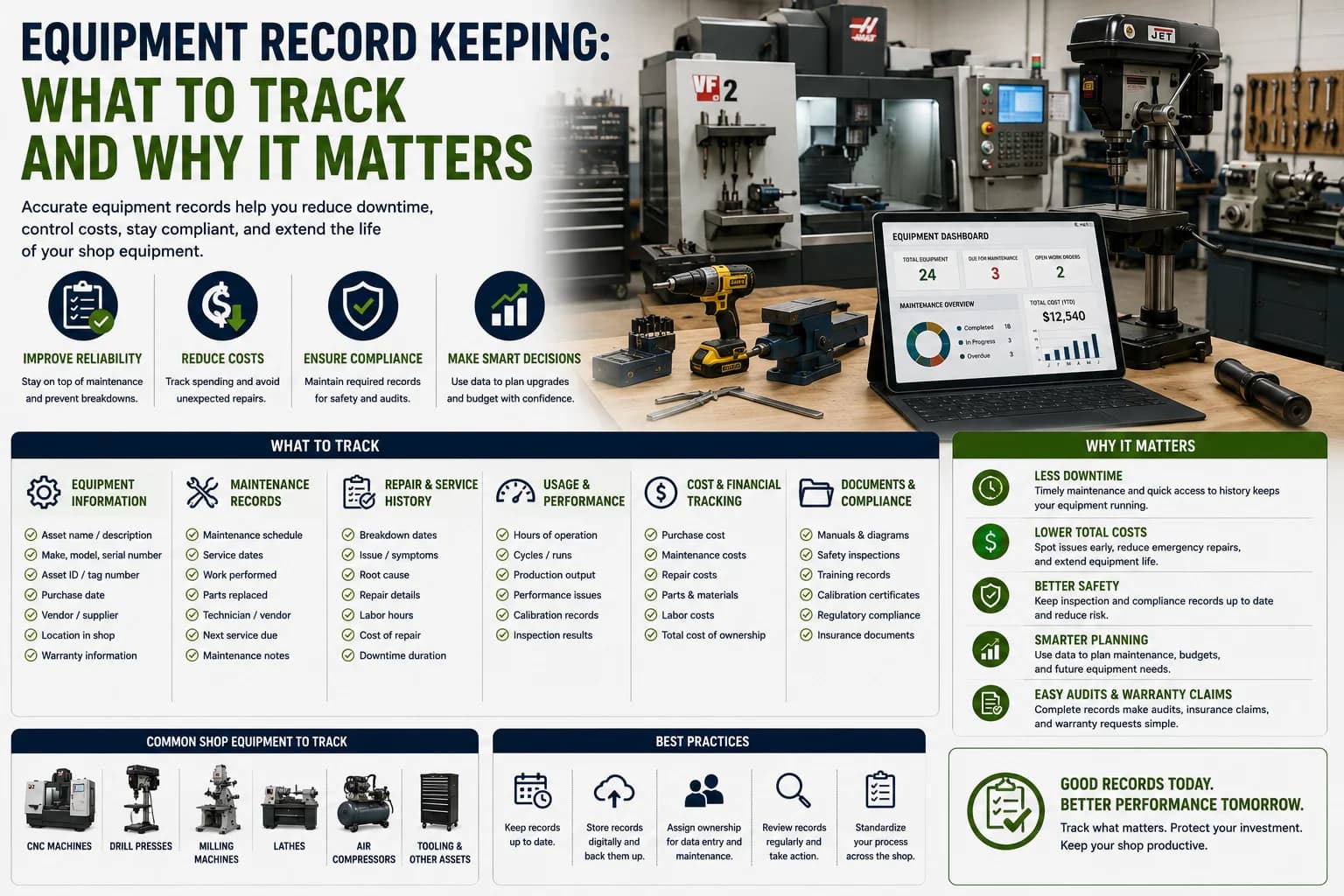
Equipment Record Keeping: What to Track and Why It Matters
Learn what equipment records businesses should maintain for operations, maintenance, insurance, accounting, compliance, and asset lifecycle decisions.

Introduction
Good equipment records help businesses understand what they own, where assets are located, who is responsible, how equipment has been maintained, and when replacement may be needed.
Without reliable records, teams waste time searching for documents, miss maintenance dates, lose warranty opportunities, and struggle to support insurance, accounting, or compliance requests.
This guide explains the core equipment records every business should maintain and how to organize them.
What Is Equipment Record Keeping?
Equipment record keeping is the process of collecting and maintaining information about business assets throughout their lifecycle.
Records may include:
- Purchase documents
- Asset details
- Serial numbers
- Warranty information
- Maintenance history
- Inspection records
- Assignment history
- Insurance details
- Disposal documents
The goal is to keep a complete and accurate history for every asset.
Why Equipment Records Matter
Strong record keeping helps businesses:
- Reduce downtime
- Support warranty claims
- Improve maintenance planning
- Prepare for audits
- Support insurance claims
- Track asset value
- Improve accountability
- Make repair or replace decisions
Equipment records turn daily activity into useful business information.
Core Records to Maintain
Purchase Records
Keep invoices, quotes, purchase orders, and payment confirmation.
Asset Identification
Track asset ID, serial number, model, manufacturer, and category.
Warranty Records
Store coverage dates, provider contacts, exclusions, and claim instructions.
Maintenance Records
Document preventive maintenance, repairs, parts used, and technician notes.
Inspection Records
Record inspection dates, results, defects, and corrective action.
Assignment Records
Track who has the equipment and where it is located.
Disposal Records
Keep sale, scrap, donation, or trade-in documents.
Organizing Equipment Records
Records should be organized by asset, not scattered by department.
Each asset file should include:
- Asset profile
- Documents
- Photos
- Maintenance history
- Inspection history
- Assignment history
- Financial records
- Disposal history
This makes information easier to find when questions arise.
How Long Should Records Be Kept?
Retention requirements vary by industry, insurer, tax advisor, and equipment type.
Businesses often keep:
- Financial records for multiple years
- Maintenance records for the asset life
- Inspection records as required by policy or regulation
- Disposal records after retirement
Consult the appropriate advisor for specific requirements.
Digital vs Paper Records
Paper records can work for very small inventories, but they become difficult to search and share.
Digital records offer:
- Centralized access
- Searchable history
- Field updates
- File attachments
- Easier reporting
- Better backups
For growing organizations, digital records usually provide better long-term control.
Common Record-Keeping Mistakes
Avoid these issues:
Missing Serial Numbers
Serial numbers help identify equipment during warranty, insurance, or theft claims.
Incomplete Maintenance History
Missing service records make troubleshooting and resale harder.
Duplicate Spreadsheets
Multiple record sources create conflicting information.
Deleting Retired Assets
Retired assets should remain archived for reference.
No Ownership
Someone should be responsible for record quality.
Equipment Record Keeping Checklist
Each asset record should include:
- Asset ID
- Equipment name
- Manufacturer and model
- Serial number
- Purchase date and cost
- Location
- Assigned owner
- Warranty documents
- Maintenance history
- Inspection records
- Photos
- Disposal records
Complete records create better visibility and fewer surprises.
Conclusion
Equipment record keeping supports every part of asset management. By maintaining purchase documents, service history, inspections, warranties, assignments, and disposal records in one place, businesses can reduce risk and make better equipment decisions.
The best record system is consistent, searchable, and updated as part of normal work.