
guide
Equipment Loans vs Leasing: How to Choose the Right Financing Structure
Compare equipment loans and leases by ownership, monthly payments, tax treatment, flexibility, maintenance, and end-of-term options.

Introduction
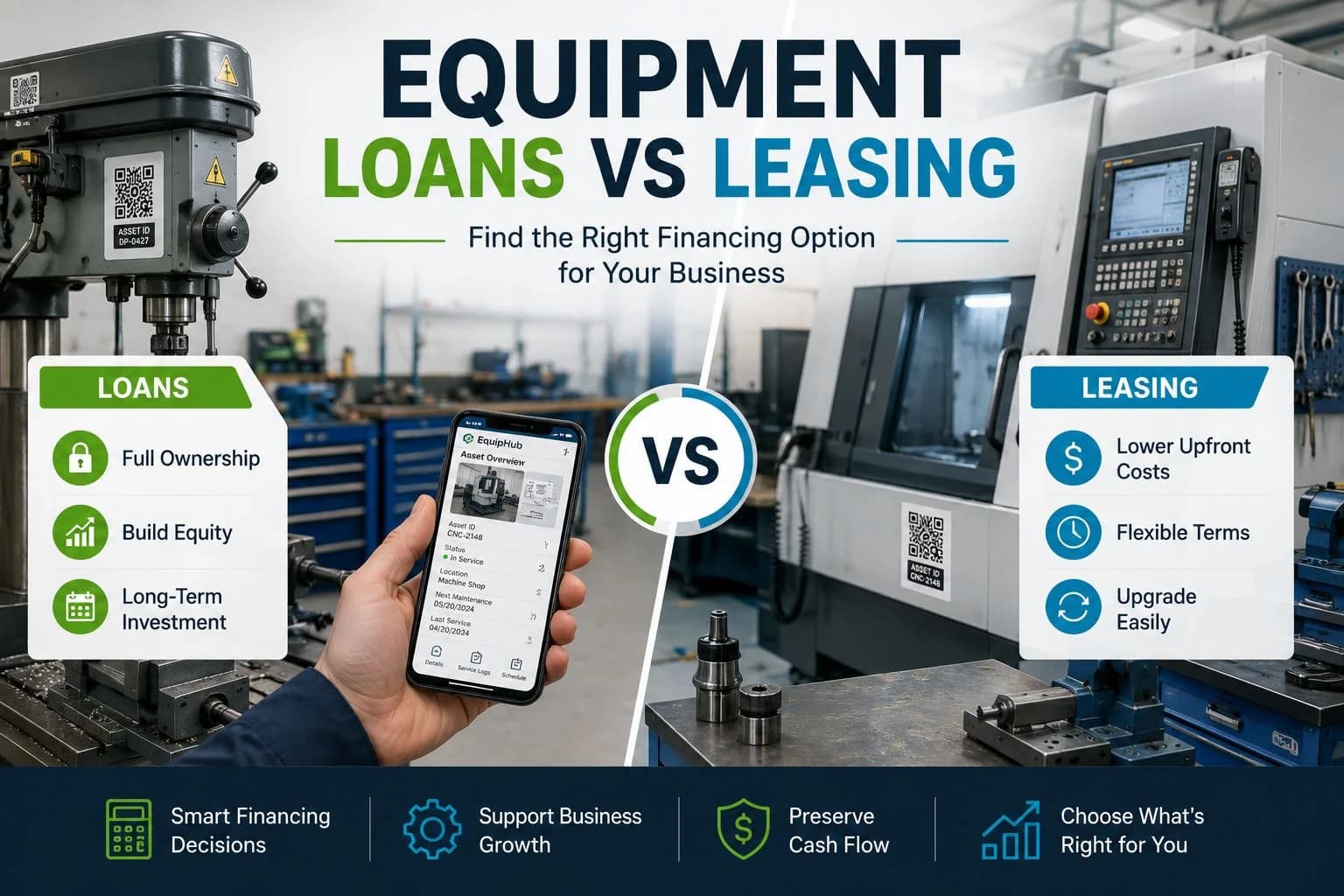
When a business needs equipment, the financing structure matters. A loan and a lease may both provide access to the same asset, but they can differ significantly in ownership, cash flow, accounting treatment, tax considerations, flexibility, and end-of-term options.
The right choice depends on how long the business expects to use the equipment, how quickly the asset becomes obsolete, available cash, and long-term ownership goals.
This guide compares equipment loans and leasing so owners can make a more informed decision.
What Is an Equipment Loan?
An equipment loan is financing used to purchase equipment.
In many cases:
- The business owns the equipment.
- The lender may hold a lien.
- Payments include principal and interest.
- The equipment may serve as collateral.
- The business keeps the asset after payoff.
Loans often make sense when the business expects to use the equipment for many years.
What Is Equipment Leasing?
Equipment leasing allows a business to use equipment for a defined term.
Depending on the lease structure:
- The lessor may own the equipment.
- The business makes regular payments.
- The business may return the asset.
- A buyout option may exist.
- End-of-term conditions may apply.
Leasing can provide flexibility when equipment needs change or technology refreshes quickly.
Key Differences
Ownership
Loans usually support ownership. Leases may or may not end with ownership.
Monthly Payments
Leases may offer lower monthly payments, but total cost depends on terms.
End-of-Term Options
Loans end with ownership after payoff. Leases may include return, renewal, or buyout options.
Flexibility
Leases can be useful for equipment that is replaced frequently.
Residual Value
With a loan, the business may benefit from resale value. With a lease, residual value may remain with the lessor unless there is a buyout.
When an Equipment Loan May Make Sense
A loan may be a good fit when:
- The equipment will be used long-term
- The business wants ownership
- The asset has strong resale value
- Customization is needed
- Usage will be heavy
- The business wants to build equity in the asset
Loans are common for durable equipment with a long useful life.
When Leasing May Make Sense
Leasing may be a good fit when:
- Equipment becomes obsolete quickly
- The business wants lower upfront costs
- Usage needs may change
- The asset will be refreshed regularly
- Maintenance or service options are bundled
- Cash flow flexibility is important
Leasing can help businesses avoid owning equipment they may not need long-term.
Tax and Accounting Considerations
Loans and leases can be treated differently for tax and accounting purposes.
Factors may include:
- Depreciation
- Interest expense
- Lease classification
- Section 179 eligibility
- Balance sheet treatment
- End-of-term ownership
Always consult a CPA or tax professional before choosing based on tax treatment.
Maintenance and Responsibility
Before signing, understand who is responsible for:
- Preventive maintenance
- Repairs
- Insurance
- Damage
- Wear limits
- Return condition
- Service documentation
Lease agreements may include specific maintenance and return requirements.
Common Mistakes
Avoid these issues:
Focusing Only on Monthly Payment
Lower payments may hide higher total cost or return obligations.
Ignoring End-of-Term Terms
Buyouts, renewals, and return conditions matter.
Choosing Ownership for Fast-Changing Equipment
Technology assets may lose usefulness quickly.
Leasing Equipment You Will Use for Many Years
Long-term use may make ownership more attractive.
Loan vs Lease Checklist
Before deciding, compare:
- Expected useful life
- Ownership goals
- Monthly payment
- Total cost
- Down payment
- Maintenance responsibility
- Tax treatment
- End-of-term options
- Resale value
- Flexibility needs
The best structure should match the asset and the business plan.
Conclusion
Equipment loans and leases can both be useful, but they solve different problems. Loans often fit long-term ownership, while leases may fit flexibility, lower upfront cost, or regular equipment refresh cycles.
Before choosing, compare total cost, end-of-term options, maintenance responsibility, and expected equipment use. Then store the financing terms with the asset record so the business can manage ownership, payments, and renewals clearly.