
guide
Equipment Insurance: What Business Owners Need to Know
Learn the basics of business equipment insurance, common coverage types, valuation methods, exclusions, documentation, and questions to ask before choosing a policy.

Introduction
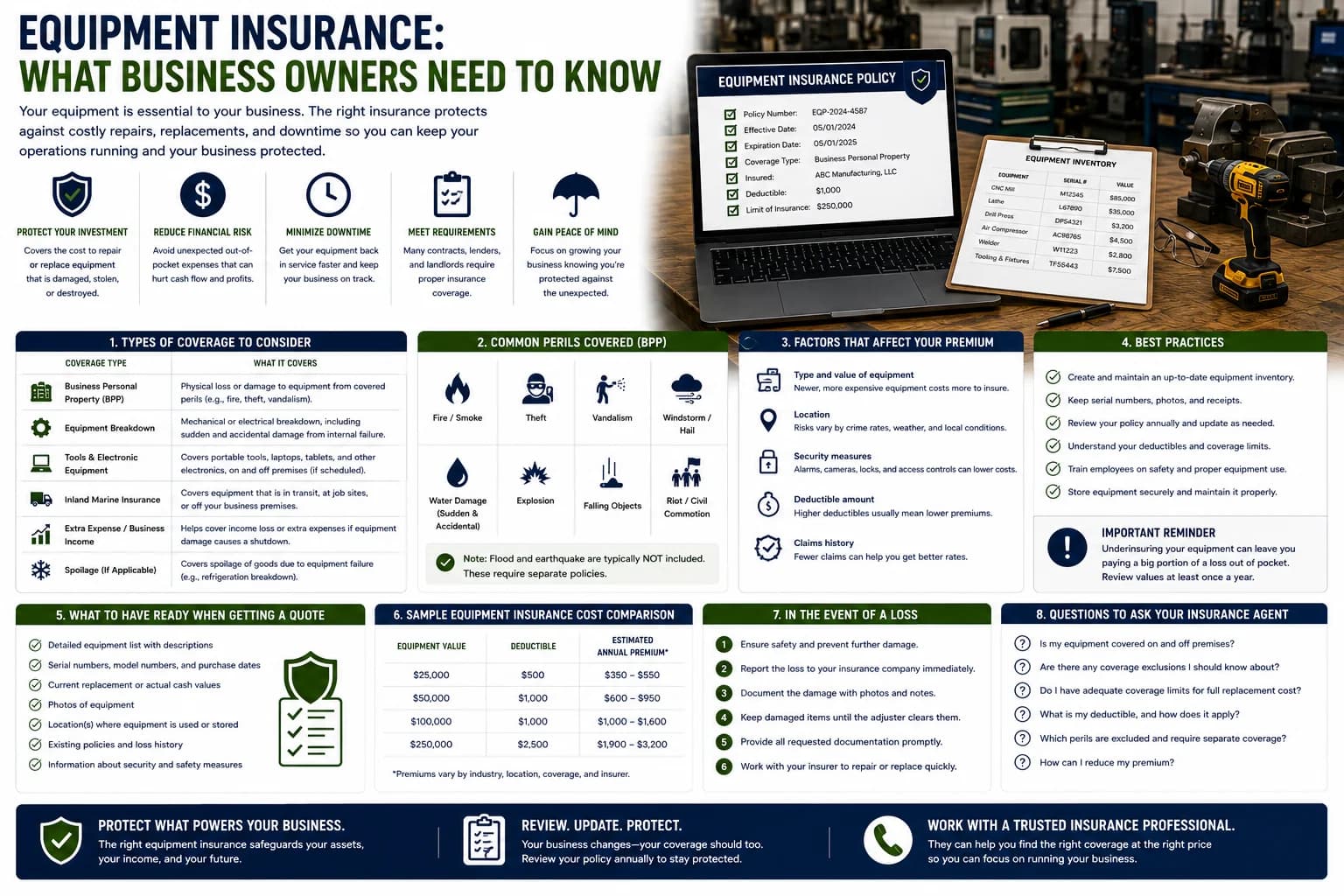
Business equipment represents a major financial and operational investment. A stolen tool, damaged machine, flooded job-site trailer, or failed production asset can create repair costs, replacement expenses, and costly downtime.
Equipment insurance can help transfer some of that financial risk, but coverage is not automatic or identical across policies. The right protection depends on what equipment a business owns or uses, where it operates, how assets move, and which causes of loss the policy covers.
This guide explains the fundamentals business owners should understand when reviewing equipment insurance.
This article is general educational information, not insurance or legal advice. Coverage varies by policy and insurer. Review your policy and consult a licensed insurance professional.
What Is Equipment Insurance?
Equipment insurance is a general term for coverage that may protect business-owned, rented, leased, or borrowed equipment against covered loss or damage.
Depending on the policy, insured property may include:
- Machinery
- Tools
- Construction equipment
- Computers and electronics
- Medical devices
- Manufacturing equipment
- Trailers and attachments
- Mobile equipment
Equipment may be covered through commercial property insurance, inland marine coverage, contractor's equipment coverage, equipment breakdown coverage, or another specialized policy.
Why the Coverage Type Matters
Different policies protect against different risks.
For example:
- Commercial property insurance often focuses on property at scheduled premises.
- Inland marine coverage may protect mobile equipment while it moves between locations.
- Equipment breakdown coverage may address certain sudden mechanical, electrical, or pressure-system failures.
- Rented equipment coverage may apply to assets temporarily in the business's care.
The policy wording, limits, deductibles, exclusions, and endorsements determine the actual protection.
Common Causes of Equipment Loss
Business equipment may be exposed to:
- Theft
- Fire
- Storm damage
- Water damage
- Vandalism
- Vehicle accidents
- Accidental damage
- Electrical failure
- Mechanical breakdown
- Transit losses
Not every cause is covered by every policy. Owners should identify their most likely risks and confirm how each one is addressed.
Replacement Cost vs Actual Cash Value
Equipment valuation affects how a covered claim may be paid.
Replacement Cost
Replacement cost coverage generally considers the cost to replace damaged equipment with comparable equipment, subject to policy terms and limits.
Actual Cash Value
Actual cash value generally accounts for depreciation, age, condition, or obsolescence.
Older equipment may produce a significantly lower actual-cash-value settlement than the cost of buying a replacement.
Scheduled and Unscheduled Equipment
Some policies require high-value equipment to be individually listed or scheduled.
A schedule may include:
- Asset description
- Manufacturer
- Model
- Serial number
- Insured value
- Location
Smaller tools may be covered under a blanket or unscheduled limit. Sublimits can apply, so businesses should compare the policy limits with the real value of their equipment.
Common Exclusions and Limitations
Policies may limit or exclude losses involving:
- Normal wear and tear
- Rust or corrosion
- Gradual deterioration
- Improper maintenance
- Intentional damage
- Unexplained disappearance
- Flood or earthquake
- Cyber events
- Certain mechanical failures
- Equipment used outside approved territories
An exclusion does not always mean coverage is unavailable. A separate endorsement or policy may address the risk.
Documentation to Maintain
Strong equipment records help during underwriting, renewals, and claims.
Maintain:
- Asset ID
- Serial number
- Purchase invoice
- Purchase date
- Current replacement estimate
- Photos
- Location
- Assigned employee
- Maintenance history
- Warranty information
- Loan or lease details
Records should be stored securely and remain accessible after a fire, theft, or other loss.
Questions to Ask an Insurance Professional
Before choosing coverage, ask:
- Which equipment is covered?
- Where is coverage valid?
- Is equipment covered in transit?
- Are rented or leased assets included?
- Which causes of loss are covered?
- How are losses valued?
- What deductibles apply?
- Are there per-item or category sublimits?
- What security or maintenance conditions apply?
- What documentation is needed for a claim?
Clear answers help reveal gaps before a loss occurs.
Equipment Insurance Checklist
A practical insurance review should include:
- Complete equipment inventory
- Accurate serial numbers
- Current asset photos
- Purchase records
- Updated replacement values
- Location and custody records
- Coverage for mobile assets
- Deductible review
- Exclusion review
- Annual policy reconciliation
Insurance records should be updated when equipment is purchased, transferred, sold, or retired.
Conclusion
Equipment insurance is an important part of protecting business operations, but useful coverage begins with accurate records and a clear understanding of the policy.
By identifying equipment risks, reviewing valuation methods, checking limits and exclusions, and maintaining evidence of ownership and condition, business owners can prepare for more productive insurance conversations and better-supported claims.