
guide
Equipment Inspections: How to Build Reliable Inspection Records
Learn how to plan, perform, and document equipment inspections for safety, maintenance, compliance, and operational readiness.

Introduction
Equipment inspections help businesses identify problems before they become failures, safety incidents, or compliance issues. Whether the asset is a forklift, truck, lift, machine, tool, medical device, or facility system, regular inspections create visibility into condition and readiness.
An inspection program works best when results are documented consistently. A quick verbal check may catch a problem today, but written records help prove what was inspected, when it was inspected, who performed the inspection, and what corrective action was taken.
This guide explains how to build a practical equipment inspection process.
What Is an Equipment Inspection?
An equipment inspection is a structured review of an asset's condition, safety, and operational readiness.
Inspections may verify:
- Physical condition
- Safety systems
- Fluid levels
- Wear items
- Controls
- Labels and tags
- Required documents
- Cleanliness
- Operational performance
The goal is to find issues early and keep unsafe or unreliable equipment out of service.
Why Equipment Inspections Matter
Inspections help businesses:
- Reduce downtime
- Improve safety
- Support compliance
- Identify maintenance needs
- Protect equipment value
- Improve accountability
Inspection records also help managers understand recurring problems across assets or locations.
Common Inspection Types
Pre-Use Inspections
Operators inspect equipment before use. These checks are often daily for high-risk or frequently used assets.
Periodic Inspections
Supervisors or maintenance teams inspect equipment weekly, monthly, or quarterly.
Annual Inspections
Some equipment requires yearly inspections, sometimes by qualified third parties.
Post-Repair Inspections
Equipment should be verified after repairs before returning to service.
Transfer Inspections
Condition should be documented when equipment moves between employees, vehicles, or job sites.
What Inspection Records Should Include
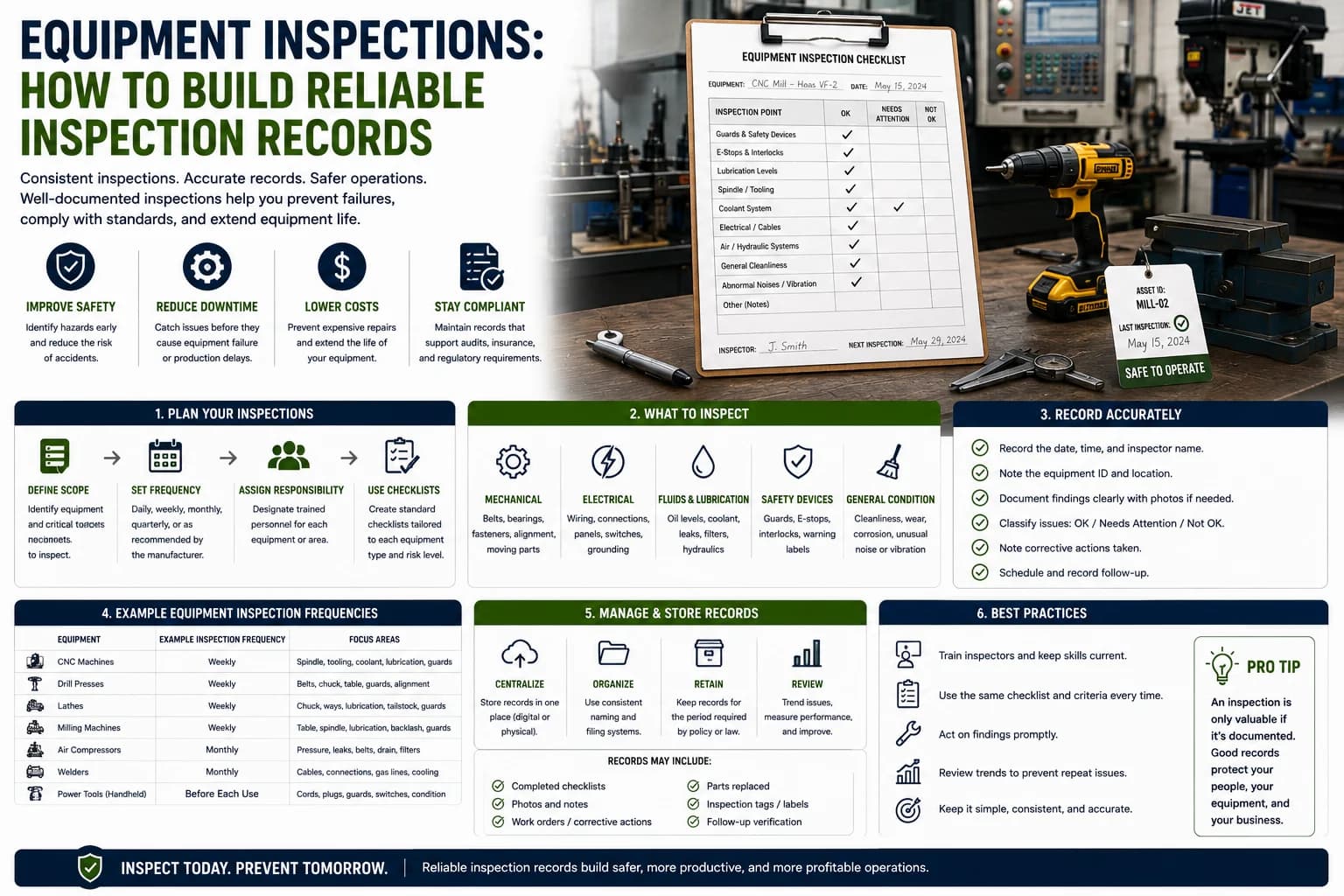
Every inspection record should capture:
- Asset ID
- Equipment name
- Inspection date
- Inspector name
- Location
- Checklist items
- Pass or fail result
- Defects found
- Photos
- Corrective action
- Sign-off
Consistent fields make records easier to review and audit.
Failed Inspections
A failed inspection should trigger a clear process.
Steps may include:
- Mark equipment out of service
- Notify the responsible person
- Create a repair task
- Attach photos or notes
- Confirm corrective action
- Reinspect before deployment
Unsafe equipment should not return to use until the issue is resolved.
Building an Inspection Checklist
Inspection checklists should match the equipment type.
Common checklist areas include:
- Exterior condition
- Leaks
- Tires or tracks
- Guards and covers
- Warning labels
- Safety devices
- Controls
- Lights or alarms
- Attachments
- Documentation
Checklists should be detailed enough to guide the inspector without becoming impossible to complete.
Best Practices
Effective inspection programs usually:
- Use standardized checklists
- Train inspectors
- Require photos for failed items
- Track corrective action
- Store records by asset
- Review recurring failures
- Keep inspection history searchable
Consistency is more important than complexity.
Common Inspection Mistakes
Avoid these problems:
Paper Forms That Never Get Filed
Inspection records should be easy to retrieve.
No Follow-Up
Finding defects is not enough. Corrective action must be tracked.
Generic Checklists
Different assets need different inspection criteria.
Missing Sign-Off
Records should show who inspected and approved the asset.
Equipment Inspection Checklist
A reliable inspection process should include:
- Asset-specific checklist
- Inspector name
- Date and location
- Pass or fail result
- Defect notes
- Photos
- Corrective action
- Out-of-service status when needed
- Final approval
These records improve safety and equipment reliability.
Conclusion
Equipment inspections are a simple but powerful way to protect employees, reduce downtime, and maintain reliable records. By using standardized checklists, documenting results, and tracking corrective action, businesses can keep equipment safer and better prepared for daily work.
The value of an inspection program comes from consistent execution and clear follow-through.