
guide
Equipment Depreciation Basics: What Owners and Operations Teams Should Track
Learn the basics of equipment depreciation and the operational records finance teams need for useful life, cost basis, improvements, and disposals.
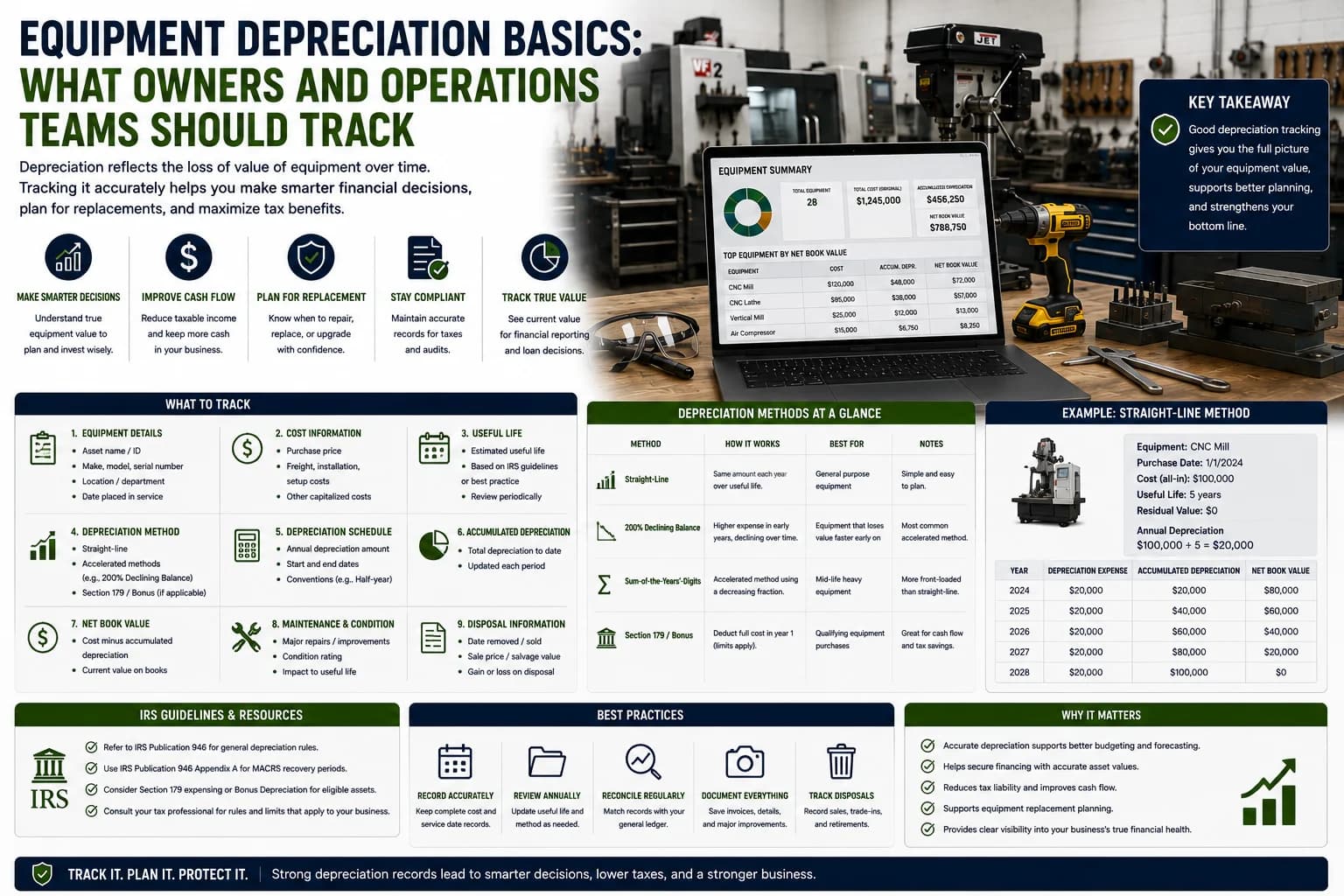

Introduction
Equipment loses value over time as it is used, ages, and eventually becomes less productive. Depreciation is the accounting process used to recognize that loss of value over the equipment's useful life.
While accountants determine the proper depreciation method, operations teams play a major role in providing accurate equipment records. Purchase dates, costs, improvements, condition, usage, and disposal details all affect financial reporting and planning.
This guide explains equipment depreciation basics from an operational record-keeping perspective.
What Is Equipment Depreciation?
Depreciation spreads the cost of equipment over the period it is expected to provide value to the business.
Instead of treating the full purchase price as one immediate expense, many assets are capitalized and depreciated over time.
Depreciation may apply to:
- Machinery
- Vehicles
- Tools
- Computers
- Medical equipment
- Manufacturing assets
- Construction equipment
The exact method and tax treatment should be handled by an accountant or tax professional.
Why Depreciation Records Matter
Accurate records help finance teams:
- Track asset value
- Prepare financial statements
- Support tax filings
- Manage insurance schedules
- Evaluate replacement timing
- Record disposals correctly
Poor records can create errors in depreciation schedules and asset reporting.
Information Operations Teams Should Track
Finance teams typically need consistent asset details.
Important fields include:
- Asset ID
- Equipment name
- Purchase date
- In-service date
- Purchase cost
- Freight or installation costs
- Capital improvements
- Location
- Status
- Disposal date
- Disposal proceeds
The in-service date is especially important because depreciation often begins when the equipment is ready for use.
Cost Basis
Cost basis generally refers to the total capitalized cost of the asset.
It may include:
- Purchase price
- Sales tax
- Freight
- Installation
- Setup costs
- Certain upgrades
Routine repairs are usually tracked separately from capital improvements. Finance should determine which costs are capitalized.
Useful Life
Useful life is the period an asset is expected to provide value.
It may depend on:
- Asset type
- Expected usage
- Manufacturer guidance
- Industry standards
- Maintenance quality
- Operating environment
Operations teams can help finance by documenting condition and usage patterns.
Common Depreciation Methods
Depreciation methods vary by accounting and tax rules.
Common approaches include:
Straight-Line Depreciation
The asset cost is spread evenly over its useful life.
Accelerated Depreciation
More expense is recognized earlier in the asset's life.
Usage-Based Methods
Depreciation may be tied to production, hours, or miles in certain contexts.
Always rely on your accountant for the correct method.
Book Value vs Physical Condition
Book value and physical condition are not the same.
An asset can be fully depreciated but still useful. Another asset can have remaining book value but be unreliable or damaged.
Operations should track:
- Condition
- Maintenance history
- Downtime
- Utilization
- Repair costs
This gives management a better picture than accounting records alone.
Disposals and Retirements
When equipment is sold, scrapped, donated, or traded in, finance needs accurate disposal information.
Track:
- Disposal date
- Disposal method
- Sale or scrap proceeds
- Buyer or vendor
- Final condition
- Approval record
- Related documents
Missing disposal records can leave ghost assets on the books.
Common Mistakes
Avoid these issues:
Missing In-Service Dates
Purchase date and in-service date are not always the same.
Mixing Repairs and Improvements
Repairs and capital improvements may be treated differently.
Deleting Retired Assets
Retired asset history should remain available.
Ignoring Attachments
Attachments and add-ons may need separate tracking.
Depreciation Record Checklist
Useful records include:
- Purchase invoice
- Asset ID
- In-service date
- Cost basis details
- Improvement records
- Maintenance history
- Current status
- Location
- Disposal documents
- Finance review notes
Consistent records help accountants close books faster and more accurately.
Conclusion
Equipment depreciation is an accounting process, but it depends on accurate operational records. By tracking purchase details, in-service dates, improvements, status changes, and disposals, businesses can support cleaner financial reporting and better asset decisions.
Always consult an accountant for depreciation methods and tax treatment, but keep the equipment record complete from day one.