
guide
Common Reasons Equipment Insurance Claims Are Denied
Learn common equipment claim problems involving exclusions, late reporting, missing records, maintenance, valuation, security requirements, and uncovered property.

Introduction
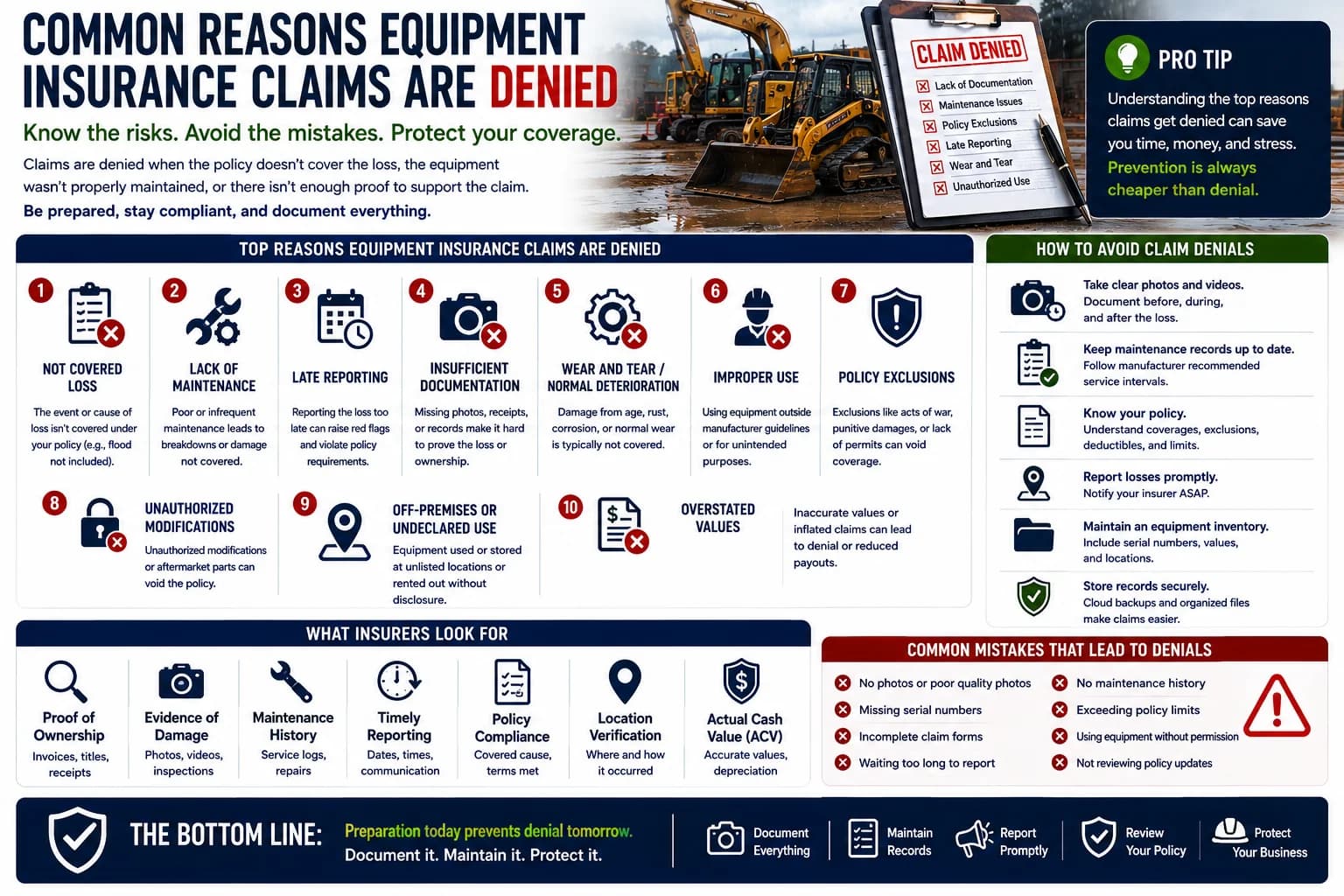
An equipment loss does not automatically result in an insurance payment. Claims are evaluated against the policy's coverage terms, exclusions, limits, conditions, and evidence.
Understanding common claim problems can help businesses improve records, report losses promptly, and identify coverage gaps before an event occurs.
A denial depends on specific policy language and facts. This article is general information, not legal advice. Consult a licensed insurance professional or qualified counsel regarding a claim.
The Cause of Loss Is Excluded
Policies do not cover every type of damage.
Commonly limited or excluded causes may include:
- Wear and tear
- Corrosion
- Gradual deterioration
- Flood
- Earthquake
- Intentional acts
- Unexplained disappearance
- Certain mechanical failures
An endorsement or separate policy may be needed for some risks.
The Equipment Was Not Covered
A claim may be disputed if the asset:
- Was never added to the policy
- Exceeded an unscheduled-equipment limit
- Was located outside the coverage territory
- Was rented or borrowed without applicable coverage
- Belonged to another entity
- Was used for an excluded purpose
Reconcile the equipment inventory with the insurance schedule regularly.
Insufficient Proof of Ownership
Insurers may request evidence that the claimant owned or was responsible for the equipment.
Useful records include:
- Purchase invoice
- Serial number
- Financing agreement
- Lease agreement
- Photos
- Accounting records
- Service history
Generic asset descriptions may not identify the specific item.
Late Notice or Missed Deadlines
Policies typically require prompt notice.
Late reporting can make it harder to:
- Inspect damage
- Investigate theft
- Preserve failed parts
- Verify the cause
- Prevent additional loss
Report events promptly and track requested deadlines.
Damage Was Discarded Too Early
Throwing away damaged equipment or failed components can remove important evidence.
Before disposal:
- Contact the insurer
- Ask for written instructions
- Photograph the item
- Preserve relevant parts
- Document emergency repairs
Safety and loss prevention still come first.
Maintenance or Known Defects
A claim involving long-term deterioration may be treated differently from a sudden accidental event.
Potential problems include:
- Ignored warning signs
- Repeated unresolved defects
- Missing maintenance
- Operation after a failed inspection
- Manufacturer recommendations not followed
Maintenance records help explain the equipment's pre-loss condition.
Security Requirements Were Not Followed
Some policies include theft conditions.
Examples may involve:
- Locked storage
- Vehicle security
- Alarm systems
- Key control
- Overnight storage
- GPS or tracking requirements
Businesses should understand any protective safeguards listed in the policy.
Misrepresentation or Inaccurate Information
Materially inaccurate information can create serious coverage issues.
Examples include:
- Incorrect asset values
- Wrong locations
- Misstated business use
- Missing prior losses
- Incorrect ownership
Insurance applications and schedules should be reviewed carefully.
The Loss Falls Below the Deductible
A claim may be covered in principle but produce no payment if the covered amount is below the deductible.
Other adjustments may include:
- Depreciation
- Sublimits
- Coinsurance
- Salvage
- Betterment
Ask for a written explanation of the calculation.
What to Do After a Denial
If a claim is denied:
- Request the decision in writing.
- Identify the cited policy language.
- Review the facts and submitted records.
- Ask what additional information may be considered.
- Discuss the decision with the agent or broker.
- Seek qualified professional advice when appropriate.
Keep communications organized and meet any review deadlines.
Claim Readiness Checklist
Reduce avoidable claim problems by maintaining:
- Current insurance schedules
- Asset inventory
- Serial numbers
- Purchase documents
- Photos
- Maintenance records
- Security procedures
- Prompt reporting process
- Evidence preservation procedure
- Policy review calendar
Preparation cannot guarantee coverage, but it can improve clarity.
Conclusion
Equipment claims may be denied because the cause is excluded, the asset is outside coverage, documentation is incomplete, conditions were not followed, or the loss calculation falls within the deductible.
Regular policy reviews and accurate equipment records help businesses understand their coverage and present stronger, more organized claims.