
guide
Building Business Credit for Equipment Purchases: A Practical Guide
Learn how business credit affects equipment financing and what owners can do to improve approval odds, terms, and lender confidence.
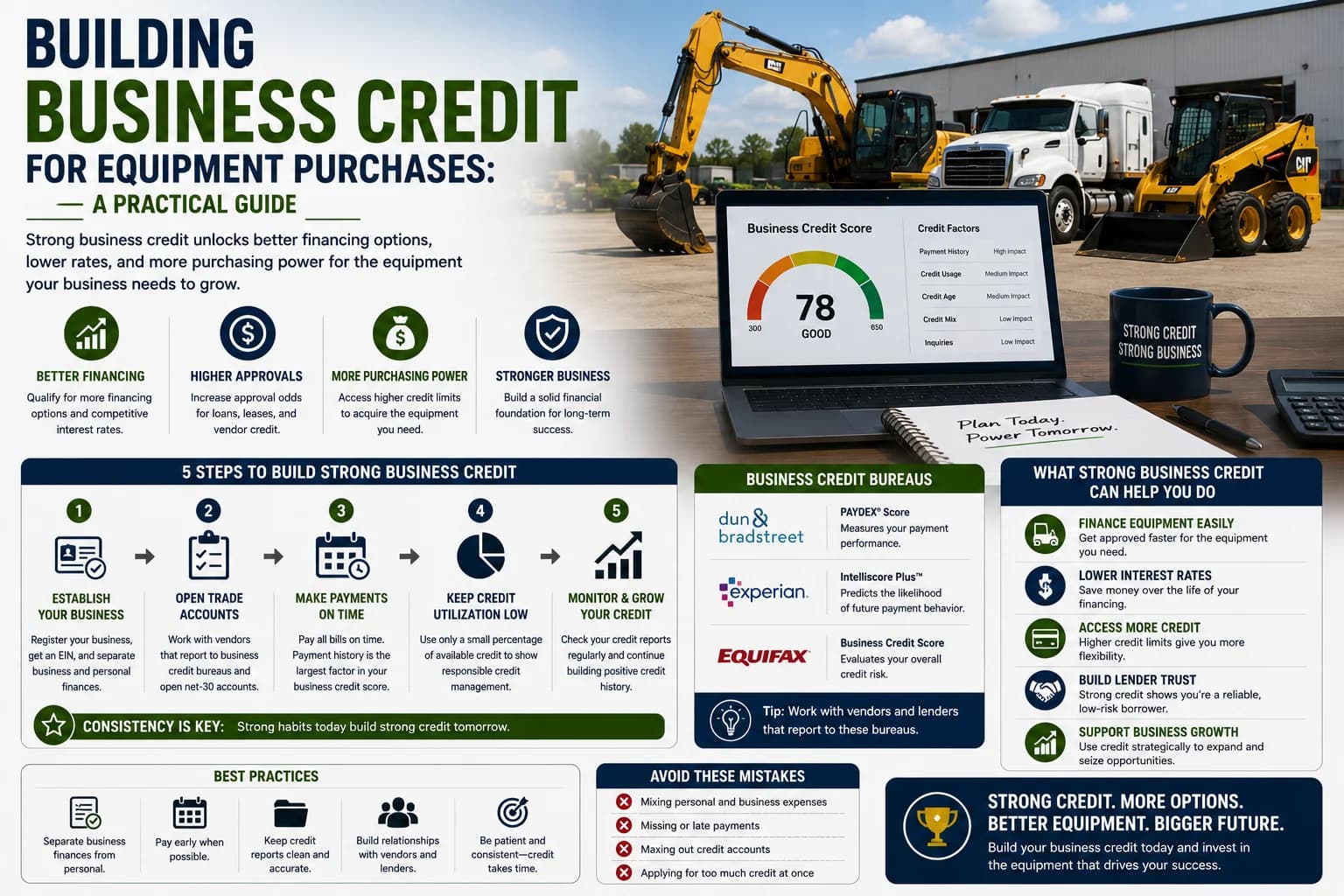

Introduction
Equipment purchases often require financing. Whether a business needs trucks, machinery, tools, medical devices, or production equipment, lenders want confidence that the borrower can repay the debt and care for the asset.
Business credit helps create that confidence. Strong credit can improve approval odds, increase lender options, reduce required down payments, and support better financing terms.
This guide explains how business credit works for equipment purchases and how owners can build stronger financial credibility over time.
What Is Business Credit?
Business credit is a record of how a company manages financial obligations.
It may include:
- Vendor payment history
- Business credit cards
- Equipment loans
- Lines of credit
- Trade accounts
- Public records
- Business identity information
Unlike personal credit, business credit is tied to the company. However, many small business lenders still review personal credit, especially for newer companies.
Why Business Credit Matters for Equipment Financing
Equipment lenders evaluate risk before approving financing.
They may review:
- Time in business
- Revenue history
- Bank statements
- Debt obligations
- Personal credit
- Business credit
- Equipment value
- Industry risk
Stronger credit signals that the business pays obligations reliably. That can make financing conversations easier.
Start With a Clean Business Foundation
Before building credit, make sure the business identity is consistent.
Important basics include:
- Legal business entity
- Employer Identification Number
- Business bank account
- Business address and phone number
- Consistent company name across accounts
- Required licenses or registrations
Inconsistent business information can create confusion for lenders and credit bureaus.
Open a Business Bank Account
A dedicated business bank account helps separate company and personal finances.
Lenders often review business bank statements to understand:
- Revenue consistency
- Cash flow
- Average balances
- Overdraft activity
- Expense patterns
Using one primary operating account makes the business easier to evaluate.
Establish Vendor Trade Lines
Vendor accounts can help build business credit when they report payment history.
Examples include:
- Parts suppliers
- Fuel vendors
- Office supply vendors
- Industrial supply companies
- Fleet service providers
Paying these accounts on time creates a track record of responsible payment behavior.
Use Business Credit Carefully
Business credit cards and lines of credit can help establish history, but they should be managed carefully.
Best practices include:
- Pay on time
- Keep balances manageable
- Avoid maxing out credit lines
- Separate business and personal spending
- Review statements regularly
Credit that is used responsibly can support future equipment financing applications.
Keep Financial Records Organized
Equipment lenders often request documentation.
Common records include:
- Tax returns
- Profit and loss statements
- Balance sheets
- Bank statements
- Existing loan schedules
- Equipment quotes
- Ownership documents
Organized records help lenders understand the business faster.
Build Payment History Before You Need Equipment
Business credit takes time to develop.
Companies that wait until they urgently need equipment may have fewer financing options.
Start early by:
- Opening vendor accounts
- Paying invoices before due dates
- Maintaining business banking history
- Keeping tax filings current
- Avoiding unnecessary debt
Credit building works best as a long-term habit.
How Credit Can Affect Equipment Terms
Credit may influence:
- Approval odds
- Interest rate
- Down payment
- Term length
- Collateral requirements
- Personal guarantee requirements
- Maximum financing amount
Credit is not the only factor, but it can meaningfully affect the cost of equipment ownership.
Common Mistakes to Avoid
Avoid these credit-building mistakes:
Mixing Personal and Business Expenses
This makes financial review harder and can weaken the business case.
Paying Vendors Late
Late payments can damage lender confidence.
Applying Everywhere at Once
Too many applications can create confusion and unnecessary credit checks.
Ignoring Cash Flow
Good credit does not replace the need for affordable payments.
Missing Documentation
Incomplete records slow down financing decisions.
Equipment Financing Readiness Checklist
Before applying, prepare:
- Business entity documents
- EIN and business bank account
- Recent bank statements
- Tax returns or financial statements
- Equipment quote or invoice
- Down payment plan
- Current debt list
- Business purpose for the equipment
- Maintenance and insurance plan
A complete package helps lenders make better decisions.
Conclusion
Building business credit gives equipment owners more financing flexibility. By separating business finances, paying vendors on time, maintaining clean records, and managing debt carefully, companies can strengthen lender confidence before a major equipment purchase.
Strong credit does not happen overnight, but consistent habits can improve approval odds and support better long-term equipment investment decisions.